Where to put pet water bowls and how to protect the floor
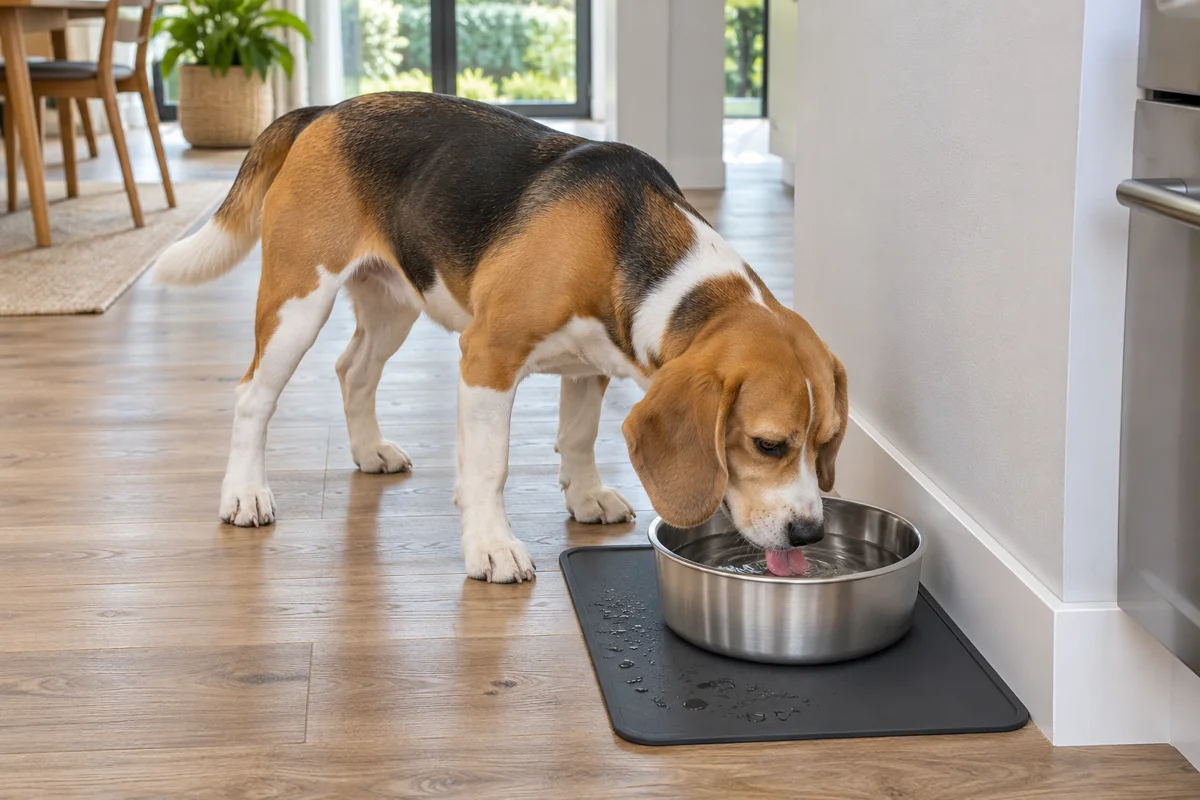
Put the water bowl where your pet already passes, off the main walkway and on a surface that stays level. Leave enough room for your pet to drink and turn away without bumping another animal or blocking a door. Protect the floor with a low mat or tray you can lift and dry. If the bowl is hard to reach for cleaning or refilling, try a different spot before buying a larger mat.
Watch what actually happens around the current bowl. Does water spill when you carry it over, drip from the pet as they leave, or collect underneath because the bowl moves while they drink? Those problems have different fixes. Start by drying the floor and watching a normal refill and drinking visit. Look again later in the day, including under the bowl. That's where slow spills can hide.
See the three water station checks
Video summary: Leave a clear approach, test the bowl and mat for grip, and dry underneath.
Compare possible locations in your home
| Location | What can make it work | What to check |
|---|---|---|
| Against a kitchen wall | Close to a sink and easy to refill | Clear of the stove, moving chairs and foot traffic |
| Quiet edge of a living room | Pet already visits and can drink without being crowded | Floor protection is easy to lift and dry |
| Near a utility sink | Quick access for rinsing the bowl | Away from appliances, cleaning products and litter |
| In a separate pet zone | Gives another animal an alternate approach | Door stays accessible and the bowl is easy to see |
| Behind an entry recess | May fit if it stays clear of door movement | Wet gear and shoes cannot land in the bowl or block it |
Pick a place that stays usable throughout the day. A kitchen corner that looks empty in the morning may be busy when people pull out stools at dinner. If a pet hesitates to approach while people eat, observe whether they have to pass through feet or move past another animal. A quiet second spot can help when there are two distinct routes through the home.
1. Watch the complete route to the water
Start where the pet spends time and follow the route to the bowl. Look for a slippery transition, a door that sometimes closes or a narrow gap with little room to turn. Notice where another animal rests. If a cat has to pass a dog's bed and squeeze behind a chair to drink, try a second water spot with a clear approach. The open-plan pet zones guide describes how to trace these paths before rearranging a room.
Check the spot from human height as well. Walk through carrying something that blocks your view of the floor. The bowl and mat should sit outside that path, and you should still be able to reach the bowl without leaning across hot equipment or standing in the doorway. Don't put the bowl where it catches a cupboard opening or where it has to be moved for routine use of the room.
Keep water accessible while testing another location. Put a second clean bowl in the proposed spot and leave the familiar source available. Watch ordinary use rather than moving the pet toward it. Familiar habits, temperature and the sound of nearby appliances can all affect when a pet approaches. Make sure the location is convenient for the pet and for the person who refills it.
2. Match the floor protection to where the drops land
Clean and dry the area, then notice the usual wet patch. If water collects just along the edge of the base, a small floor-compatible mat may be enough. If droplets follow the animal into the room, put the mat on the natural route away from the bowl when you can do so without blocking people. A large tray that is hard to lift encourages you to leave water in it. Use a manageable size and check the edge for curling.
Inspect the grip of the bowl and mat separately. On a level patch of floor, push the empty bowl from the side. If it slides easily, test a suitable nonslip base or choose a stable bowl. If the mat moves as well, changing bowls alone may not solve it. The dog bowl comparison guide describes a quick test for rocking, sliding and grooves that trap water.
Check that the floor maker allows the mat or backing material, especially on finishes that may discolor or hold moisture. Use something that lies flat and fits entirely within the space. A tray can be easier to rinse when the rim is low and its corners are easy to reach. Lift it after a spill and dry the floor before putting it back. A washable rug may work in some dry areas, but see the washable rug guide if the same spot gets wet repeatedly.
3. Make refilling and wiping easy to remember
Carry the bowl to the sink to wash it as needed, and refresh the water on a routine that fits the household. Check the base whenever you pick it up. Keep a cloth or towel in a predictable place outside the pet's reach. Wipe up spills so water cannot remain hidden beneath the mat. If filling the bowl at the sink means carrying it across a busy room, use a clean container to bring water to the bowl where practical.
If there is a fountain, follow its own instructions for cleaning, replacing filters and checking the cord and pump. Keep a suitable backup bowl available and place cords away from routes where people or pets could catch them. Give another caregiver a simple description of where the water is and what to check. A row on the pet chore chart can record refills and floor cleanup without making the routine complicated.
4. Review the spot during a busy day
Check after a refill, after the busiest part of the day and before bed. Watch where water collects and whether people have begun moving the bowl to get past it. If a second animal sometimes blocks the approach, keep another water point in a quieter place. Fix the first inconvenience you notice and see how the area behaves before making several changes at once.
After washing the mat, check it lies flat and that the underside is fully dry. Replace a mat if it starts to curl or shed pieces. If moisture persists under the bowl, use the space where you can see and wipe water most easily without making access harder for the pet.
Frequently asked questions
Should the water bowl go against a wall?
A wall can keep the bowl off the walkway, but leave enough room on the open side for the pet to stand and turn. If the animal has to squeeze into a corner or pass close to another pet, try a more open position.
Is an absorbent mat better than a tray?
An absorbent mat can take up small droplets, while a tray can make a larger spill easier to see. Choose whichever is compatible with the floor and easiest to lift, clean and dry in your room.
How do I know whether to add a second water bowl?
Watch whether the existing route gets blocked or is inaccessible at different times. A second accessible bowl can help in a quiet part of the home. Keep both clean and verify that the animals can reach them comfortably.