How to set up a low-clutter pet care corner in a studio
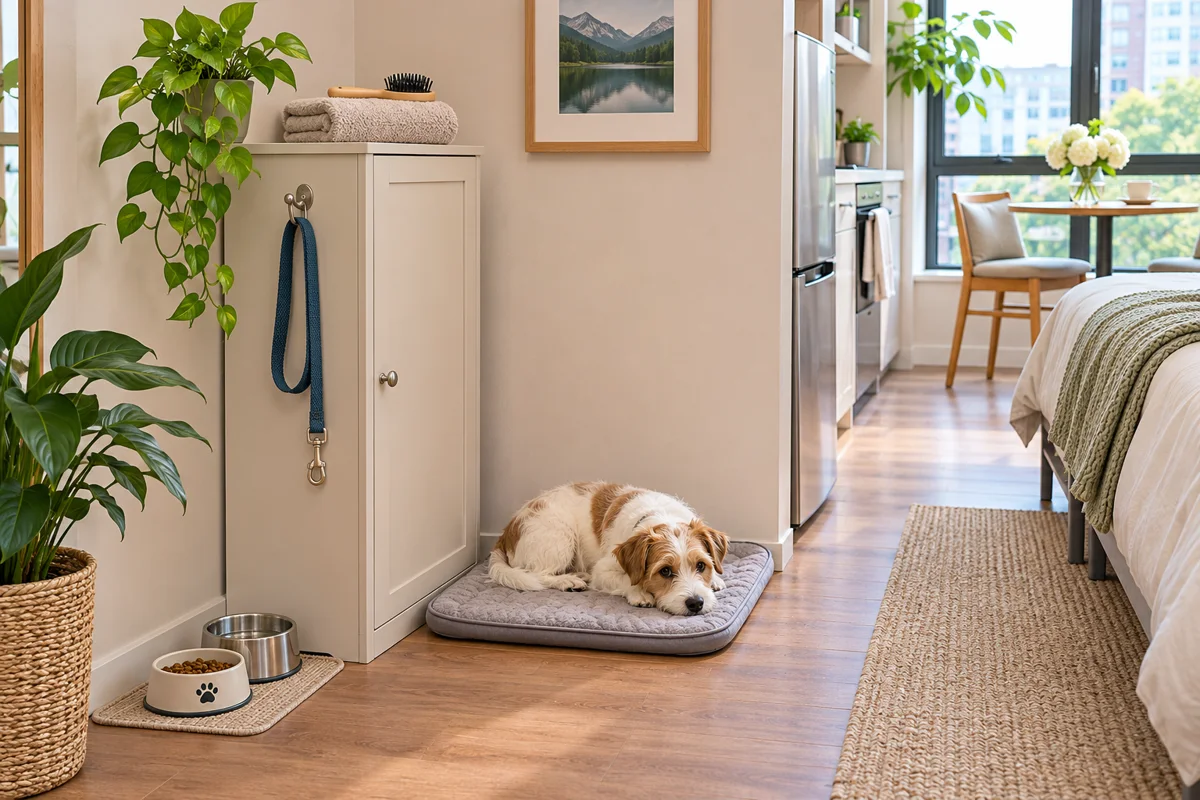
Choose a small area for the supplies you reach for every day, and give the animal's bowl, bed and litter tray their own accessible places. Start with a shallow shelf or one secure drawer and decide which daily actions it needs to support. A studio works best when you can refill water, grab a leash or put away a toy without clearing another surface first. Keep enough of the floor open for normal movement and use another spot for backup supplies.
A care corner can be the place you keep a towel and a brush, even when the pet spends most of the day somewhere else in the room. Look at how you use the studio before you consolidate anything. A corner near the sink may be good for a clean cloth and spare bowl, while the dog leash belongs close to the door. Decide which pieces need to be together and which zones can stay separate.
See the three studio care corner checks
Video summary: Keep paths open, store daily gear within reach and reset the corner after use.
Give each group of supplies a practical home
| Group | Small-space option | Before you choose the location |
|---|---|---|
| Everyday walking gear | Existing hook by the entrance | Confirm you can clip the leash with the door shut |
| Clean towels and spare bedding | Shallow drawer or washable bin | Keep the storage dry and easy to open |
| Food and meal tools | Closed storage near the preparation surface | Follow storage directions and keep cleaning products separate |
| Play supplies | Small basket or closed drawer near the play area | Keep supervised or small items out of reach |
| Cleaning supplies | Dedicated secure spot away from food and pets | Leave room to lift wet items out for cleaning |
| Travel equipment | Accessible shelf or another suitable storage area | Keep carrier doors, clips and straps easy to inspect |
Use the table to plan the smallest version of the corner. If you use one leash, one towel and one brush every day, those three things can do more for your routine than a new cabinet. Store seasonal gear, unopened supplies and travel items somewhere practical rather than crowding the everyday spot. Keep storage stable and use hardware suitable for any mounting required.
1. Trace three ordinary trips through the room
Follow the route from the entrance to the place you put a bag. Then follow the route from the sink to the water bowl. Finally, follow the path the pet takes from a resting place into the most active part of the studio. Notice where these routes overlap. A box that fits neatly against a wall can still be in the way if you step there each time you hang a coat or if it blocks a turn the cat makes on the way out of a resting area.
Check the footprint with everyday furniture in its usual configuration. Pull out the dining chair, open the sofa bed if you use one, and move the laundry basket as you normally would. Choose a place where you can reach the supplies without moving the animal's bed or opening an exterior door. The small pet entryway guide walks through a similar test around thresholds and door swings.
Put the pet's usual resting spot where it can stay available, including when you have a visitor. Leave space around the water bowl and keep litter separated from food and water. If there's more than one animal, use the open-plan zones guide to check access and exit routes instead of fitting the animals' resources into one tight corner for the sake of storage.
2. Set up the care corner around your next action
Put the items you use first at the easiest height for you to reach. If you come in with a wet dog, hang a clean towel within reach of the dry landing area and have a destination for it once wet. If preparing a meal is the recurring job, keep the scoop near the food and store a clean bowl where you can reach it without touching used dishes. Keep packaging and any small items away from animals that might chew them.
Give each item one place to return to. A shallow container with enough room to lift each piece can make a better daily setup than a deep bin you have to unpack. If the studio has only one useful cupboard, use separate sections for food and care gear. Keep clean replacement covers away from damp items. Put anything used after a muddy outing into the laundry or drying routine immediately.
Leave the bulk supplies outside the everyday spot. If a large food container or spare mat can be stored elsewhere safely, keep only the amount or piece that the routine calls for, following storage instructions. Put a simple reminder on a container or in a shared note if you're consistently running out of something when you need it. The shared pet chore chart has a row for restocking or sending used items for cleaning.
3. Make play and cleanup easy to reset
Choose a clear floor strip for short supervised play. Keep the toy container out of that strip and check it doesn't need to be moved before every session. Put string or wand toys back in inaccessible storage afterwards. A small selection can make it easier to see if something has rolled under furniture. The toy storage guide shows how to keep reserve toys and damp items separate from the everyday selection.
Test another cleanup job with the room in its evening layout. Lift the water mat, wipe beneath it and put it back when the surfaces are dry. If you're unable to reach the underside without shifting a chair, move the bowl or choose protection you can lift more easily. Keep a spare towel handy for a quick wipe while taking used cloths away from the preparation area.
4. Try the setup for a few ordinary days
After several arrivals, meals and play sessions, check what keeps getting set down outside the corner. A leash beside the keys may indicate its hook is too far away. A stack of wet towels beside the door suggests the drying route is inconvenient. Move one part and see whether the next day is easier. If an item has not been used and takes up space you need, put it with the reserve supplies.
Show the routine to another person who might help you care for the pet. Ask them to find the leash or brush, refill the water and return the cloth without prompting. Adjust any location they couldn't identify. A small setup is useful when it works on a busy day as well as after you have cleaned the whole room.
Frequently asked questions
Should I put the bed and food beside the care corner?
Put the pet's resources where the animal can use them comfortably. The corner can be a supply area, while the bed and bowls are elsewhere. Give the animal a clear route and a way to leave each area.
What if I only have one spare drawer?
Use it for dry daily supplies that can safely share the space, and keep food and cleaning products in appropriate separate storage. You can hang walking gear on a suitable existing hook or keep it in another accessible spot.
Where do I store a carrier in a studio?
Choose a dry, stable location where you can inspect and reach it without blocking a path. If the cat already uses the carrier as a resting option, keep the door secured open in a quiet spot. Check the complete carrier and latches before you use it for travel.