How to pack a pet travel bag you can use on the move
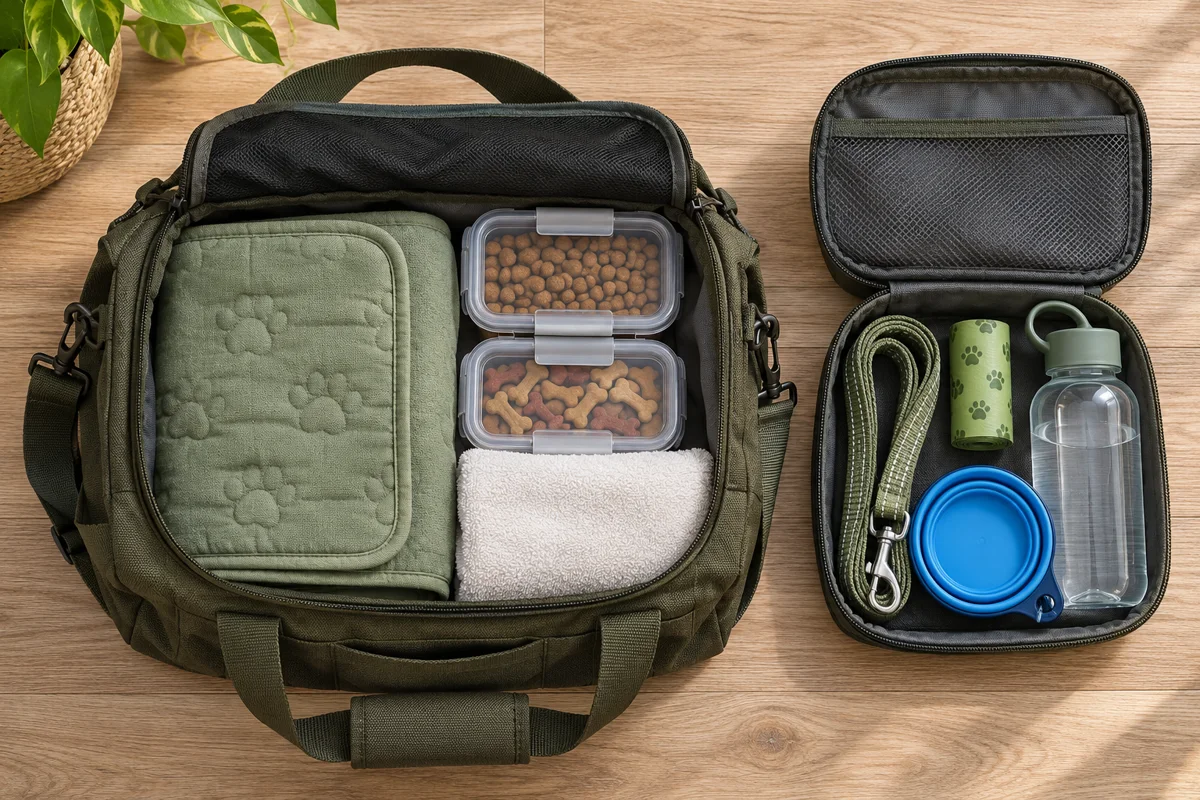
Pack a small pouch for the first stop and the arrival, and keep it where you can reach it before opening the vehicle door or leaving the station. Put the walking gear or carrier supplies, waste bags, an accessible water bottle and a familiar bowl in that pouch. Put spare meals, bedding and cleanup supplies in the main bag. If you need to open the main bag beside a busy road just to find the leash, move that item before you leave.
Plan around the trip you are taking. A cat going to a nearby appointment may need a secure carrier, a spare liner and the paperwork at hand. A dog staying overnight may need a familiar mat, measured meals and a towel for wet paws. Write down what you will do at the first stop and at the destination before filling the bag. Those two moments tell you which items should be easy to grab.
See the three travel packing checks
Video summary: Stage the first-stop pouch, label meals and rehearse arrival.
Pack for each stage of the trip
| Stage | Put within reach | Keep in the main bag |
|---|---|---|
| Before departure | Carrier or travel restraint, keys, required records and contact information | Copies of non-urgent paperwork if needed |
| At a stop with a dog | Fitted harness, leash, water, bowl and waste bags | Spare gear and the next sealed meal |
| At a clinic with a cat | Carrier instructions, appointment details and a clean liner | Additional towels or spare textiles |
| At an overnight destination | First meal, water bowl and familiar resting mat | Later meals and backup bedding |
| If something spills | Small towel and a bag for soiled supplies | Replacement liner, clean towel and cleanup supplies |
Use the table to decide where things go before you decide how much to carry. A bottle you can use at the first stop is more helpful than a larger bottle at the bottom of a packed duffel. Keep the pouch separate from items that might leak. Find the number for your destination and a local veterinary practice if appropriate, and save key details so you can reach them if mobile data drops.
1. Rehearse the first stop with the bag empty
Stand beside the vehicle or in the place you will pick up the bags. Decide where you will keep the day pouch and what you need to reach first. Practice the order with the pet safely elsewhere. For a dog, check that you can get the leash without releasing the travel restraint or opening a door the dog could move through. For a cat, keep the carrier secured and know where you will set it down if you need a free hand. Keep bags clear of the carrier doors and ventilation.
If you travel with another person, decide who handles the pet and who handles the doors, bags and paperwork. A driver who parks beside a curb needs a clear answer about which door they will use. A passenger who takes the pet should know where the leash is before stepping out. If you are alone, lighten the pouch so you can reach the relevant item without balancing two bags.
Walk through any station or accommodation instructions before departure. Verify the transport provider's rules for pets and carriers for your specific service. Keep relevant documents together so you can get them without opening or unlatching the carrier. The cat carrier comparison explains how to check openings and fasteners before relying on an unfamiliar carrier.
2. Protect food, water and clean textiles
Pack the food your pet already eats rather than counting on a shop near the destination. Label the portions by animal and meal, especially if two animals share the bag. Follow storage instructions for the food you are taking. Keep anything that needs refrigeration in an appropriate setup. If the trip could run long, make sure your backup plan includes enough supplies or an accessible place to get the right type.
Use a bottle you can close securely and put it upright if the bag allows. Test a travel bowl before you rely on it. Check that it stands flat, rinses easily and fits where you expect to use it. If the bowl folds, dry it before storing it away from the food. Pack a familiar bedding item that fits in the carrier or destination without covering vents or interfering with the approach. A thin washable mat is often easier to pack than a thick bed.
Pack a clean liner and a bag for used textiles separately. Make sure you can tell them apart by touch or from where they sit. Keep cleanup products in their original labeled containers if you bring any, safely away from food and within the rules for your transport. A small towel near the top of the pouch can handle the first spill while you decide how to sort the rest.
3. Check backups and boarding details
Inspect clips, handles, zipper pulls and carrier latches while everything is empty. Check that the harness fits the pet today and that the identification details are current. If you bring a spare leash or liner, make sure it works with the setup rather than taking something unfamiliar just because it fits in the bag. The harness fit guide can help you check fit before departure.
Save any written veterinary instructions you need for the trip and keep medication in the original container, following storage directions. If you are uncertain about how to manage a missed dose, transport a medicine or help an animal that has trouble traveling, ask the veterinary practice before leaving. Put the number where another traveler could find it if they're looking after the pet for part of the route.
4. Set up the destination before unpacking everything else
On arrival, bring in the pouch and arrange the first water and resting spot. For a dog, follow the planned toilet route before settling in. For a cat, use a secure quiet room and follow the plan for when to open the carrier. If you are staying overnight, put tomorrow's walking equipment or carrier supplies somewhere you can find them without unpacking again. The first overnight trip guide has a sequence from arrival to the morning return.
After you get home, empty and dry the bag. Replace used waste bags and move soiled equipment to the right cleaning area. Note what was hard to find and what stayed unused. Use those details to refine the next trip.
Keep the bag usable on the return trip
Set aside one pocket for items you will need during the drive or ride home. Move a fresh waste bag and a dry liner into it before you leave the destination. Refill the water bottle where you have access to a sink. Put damp textiles into a separate washable bag for transport and empty that bag when you get home. A quick repack while you still have a clear surface helps you avoid hunting through wet gear during the next stop.
Frequently asked questions
Should I pack everything in one bag?
One bag can be enough for a short journey if it has a pouch you can reach first. Use a separate main bag when you have bedding or later meals that you won't need during arrival.
Should I keep a spare leash in the car?
A compatible spare can help if the usual leash is damaged. Store it where you can access it without opening a door the dog could exit through. Inspect the clip and strap before the trip.
What belongs in a bag for a short cat appointment?
Start with what the trip actually needs: the secured carrier, appointment details, any requested records, and a spare liner or towel you can keep clean and dry. Confirm clinic instructions in advance if there are special handling or preparation requirements.