How to set up separate pet zones in an open-plan room
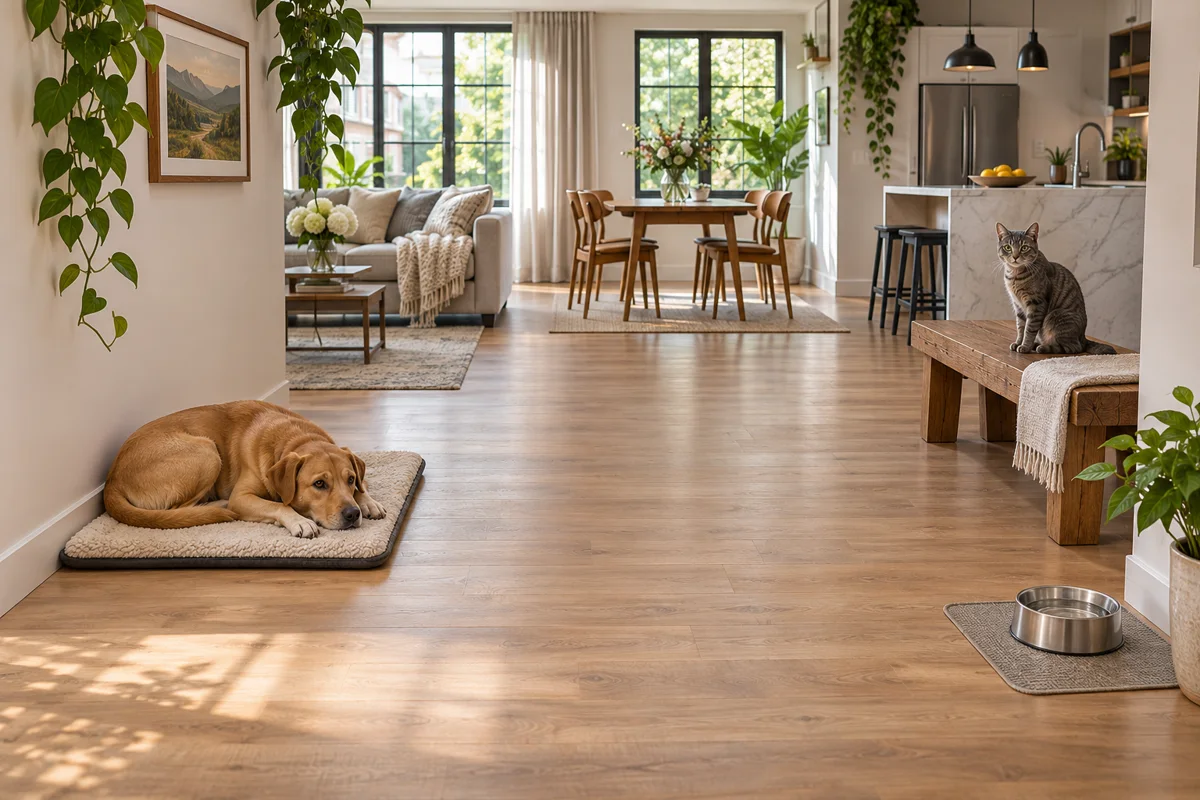
Start by giving meals, water, litter and rest distinct spots with clear routes between them. In a room shared by a dog and cat, put the cat's essentials somewhere the dog cannot crowd the approach, and keep both animals' resting areas out of the main walkway. Use furniture and the room's existing corners to guide movement. Decide separately whether you need a physical barrier to control access during meals or while you are out.
Watch how the room works before you add furniture. The route that needs attention is often a short stretch between two resources rather than the entire room. If the cat must pass the dog bed to reach the litter tray, moving the bed may solve more than dividing the room in half. Start with the route the animals use the most. Leave familiar resources available until you see that the new arrangement works.
See the three open-plan setup checks
Video summary: Trace the routes, separate meals and leave quiet retreats.
Assign space by what happens there
| Zone | Place it where | Check in ordinary use |
|---|---|---|
| Meals | Each animal can eat with the agreed level of separation | They can approach and leave without crossing the other bowl |
| Water | The bowl stays accessible without blocking a route | Spills can be wiped up and the area can dry |
| Rest | Away from door swings and frequent foot traffic | Both animals can leave their spots without passing close together |
| Litter | A quiet, accessible part of the home separated from food | Cat has a clear approach and the dog cannot interfere |
| Play | An open stretch with suitable footing | Toys can be put away and the retreat remains available |
A zone can be a distinct spot rather than a large area. A bed off to one side of the sofa and a separate quiet chair can create two resting options within view of the same room. Use a quiet adjacent room when the available floor area makes safe separation difficult. If one of the pets is new, keep their quiet first room set up while you test the shared area gradually.
1. Trace the paths that matter most
Sketch the room and mark doors, furniture, resting places and the locations of food, water and litter. Draw the path each animal normally takes from a resting place to the next resource. Then draw the path people use to carry plates, fold laundry or walk into the kitchen. Look for intersections where everyone needs the same narrow gap or has to stop and wait for someone else to move.
Begin with bottlenecks. A bowl placed next to a doorway can block someone entering, and a resting mat just beyond a corner may surprise an animal coming around it. If the dog regularly lies in a particular place, consider whether you can move the route to the cat's tray around it. Preserve an exit from each spot so an animal can turn away rather than being forced to go past the other pet.
Try temporary markers for proposed furniture locations while the pets are elsewhere. Walk through the paths yourself and open nearby doors fully. Clear away the markers before you let the animals into the space. The small entryway guide explains a similar test for checking a tight route while carrying a bag.
2. Make meals predictable and control access where needed
Give each pet a familiar bowl and a defined place to eat. If they need a barrier between them, set up and test the separation before bringing out food. Decide how you will remove bowls at the end and open the space again. Food tucked into a corner may look tidy, but check that the pet can move away if a person or animal approaches. Use a separate room if the shared layout cannot provide enough distance.
Choose a water spot with steady footing that is easy to inspect. Avoid making one animal pass directly beside the other's meal to get to it. Keep any extra bowls accessible from a different route if they help the animals avoid crowding. Check the floor underneath after a refill. A mat can catch drops when it stays flat and dry underneath, but a soaked or curled mat can make the approach worse.
Keep the cat's litter tray in a spot the cat can really access. Don't use a dog barrier that also blocks the cat from reaching it. Notice what happens when a chair is pulled out or a door closes during a normal day. An approach that works only when the room is empty may not work while the household is home.
3. Give each animal a place to opt out
Move dog beds and cat resting spots away from active play and door swings. A cat may choose a stable raised spot if the cat can get there and back down easily. A quiet floor-level option can be just as useful for an animal that prefers it. Leave familiar bedding or a retreat in place when you can. If you need a new raised option, use the rental cat perch guide to check stability and clear landings.
Furniture can define a boundary, but use suitable secure separation when you need to prevent access. Avoid gaps where an animal could get stuck behind furniture. If you add a gate, check its installation and the animal's ability to get past it. The indoor gate measurement guide covers openings and mounting surfaces. If animals are tense around one another, give them distance and seek qualified help if you cannot manage the arrangement safely.
4. Observe the room during a real day
Check the setup at breakfast, during a busy period and when everyone is settling for the evening. Look for an animal pausing near a bowl, detouring around a bed or waiting for another pet to leave a narrow passage. Move one item at a time so you can see whether the route gets easier. If an animal avoids a resource after you move it, keep a familiar accessible option available while you test the change.
Tell other people in the household how the spaces work. Agree on when a door or gate stays closed and which paths must stay clear of bags and toys. Put equipment away after play and give resting animals room. A setup that still makes sense during the busiest hour is easier to maintain than one that works only after the room is tidied.
Frequently asked questions
Can a rug work as a boundary between pets?
A rug can mark a resting or play area and provide footing when it stays flat. Use a suitable physical separation when you need to prevent an animal from entering a zone. Keep the exit from each rug clear.
Where should I put a litter tray if there is a dog in the room?
Look for a quiet place the cat can enter and leave without passing near the dog. Keep it separate from feeding areas. If the dog can interfere in the open room, use a suitable nearby space with controlled access.
Do I need a separate zone for every toy?
Set up one clear space for active play and a place to put toys away. Keep it apart from resting and feeding spots so a quiet animal can opt out. Use a separate play session if sharing the area leads to competition.