How to set up a quiet first room for a new cat
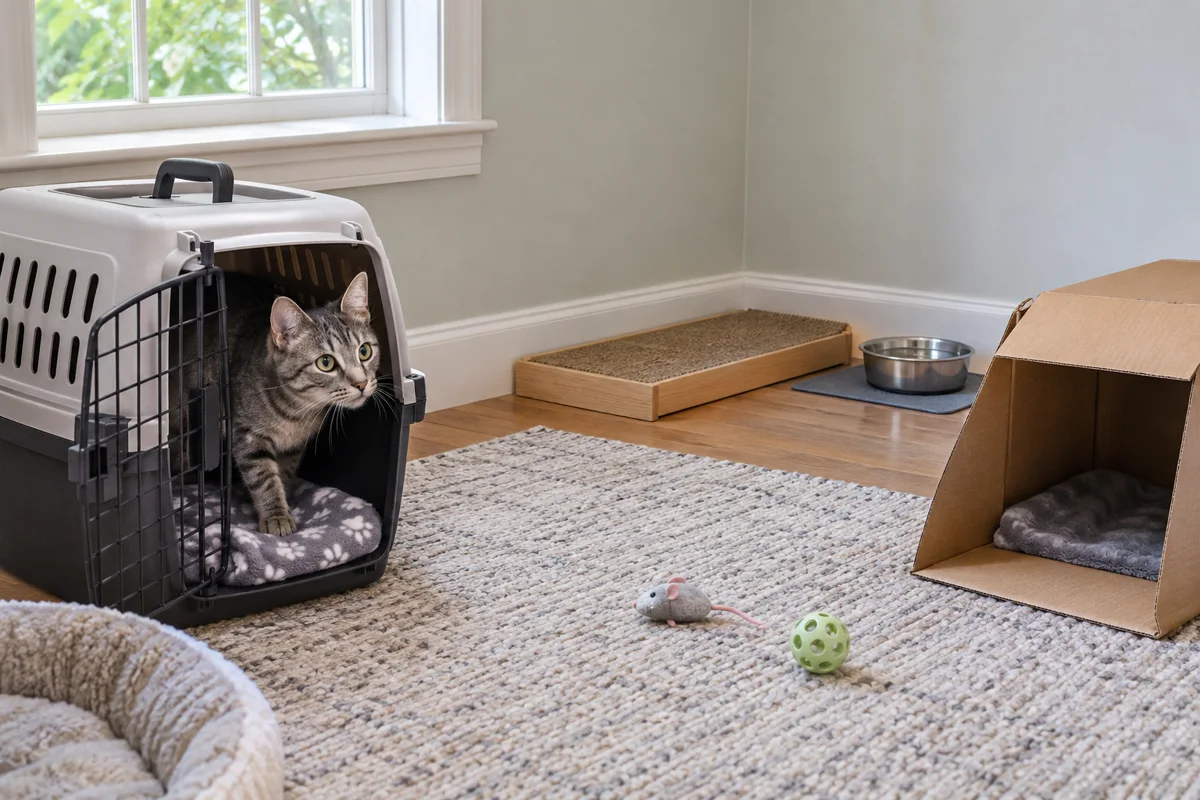
Choose a room with a door that closes securely, somewhere the cat can hide safely, and enough space to put the litter tray apart from food and water. Set up the room before the carrier arrives. When you bring the cat inside, close the door, set the carrier on the floor and open it. Give the cat room to come out on their own. They may go straight to a hiding place or spend time looking around from the carrier.
A bedroom or a quiet study can work if you can keep people from walking in and out. A spare bathroom can work if the floor is dry and you can separate the tray from the bowls. Start with the room you can control in practice. A large room with a door that is opened every few minutes is harder to manage than a small room where you can carry out feeding and cleaning quietly.
See the first-room setup
Video summary: Prepare one quiet room, separate the essentials, and give the cat time to exit the carrier.
Pick the room by what you can change
| Room | What makes it a good option | What to fix before arrival |
|---|---|---|
| Spare bedroom | Low foot traffic and space to separate resources | Block unsafe gaps under furniture and secure windows |
| Quiet office | Familiar room you can visit without much noise | Tidy reachable cords and check that nothing can fall |
| Bathroom | Easy-to-clean floor and a door you can keep shut | Put away cleaners, close the toilet lid and separate bowls from litter |
| Main living room | May work in a home where other rooms are unavailable | Control door traffic, noise and access from other animals |
Walk through your chosen space before moving the bowls in. Open the door as you would when carrying a tray or food. Notice where you put your feet and which way the door swings. Leave a little clear space during each visit so you can close it securely without having to step around the cat. Tell other people in the home where the room is and what they should do before opening it.
1. Make a route from the carrier to cover
Look at the room from floor level. A gap between a cabinet and wall that barely registers from the doorway may be the first place a cat sees. Cover dangerous voids or spaces where you could not safely reach the cat if needed. Put electrical cords out of reach and remove breakable objects from shelves they might jump onto. Check windows and screens, especially if the room has been aired out earlier in the day. Keep the door closed during arrivals.
Offer a box with a broad opening, or another covered resting place the cat can reach easily. Put it off to one side and give it a clear path in and out. The cat should be able to watch some of the room from that spot without having to sit next to your shoes or the door. A second choice, such as a covered bed or an open carrier they already know, gives them somewhere else to go when you prepare the litter tray.
Set the carrier down before opening it. Avoid tipping it, reaching in to take the cat out or putting your face close to the opening. Sit or stand back so the path to cover stays clear. If the cat chooses the carrier for a while, leave it available as long as that is practical and safe, with the door held open so it cannot swing shut. Have the household wait outside the room until you have seen where the cat settles.
2. Put litter, water and food in separate places
Start with the litter and food the cat already uses when you can get that information from the previous caregiver. A familiar tray setup makes it easier to tell whether the new room is working. Put the tray on a stable, cleanable patch away from bowls and the resting place. Keep the path to it clear, including while you are sitting in the room. In a small room, use different corners and leave room between them for the cat to move.
Put fresh water where it is easy to find and where you will notice if the bowl needs a refill. Set the food in a quiet spot you can reach without moving the hiding place. Avoid setting bowls directly beside a noisy appliance or a spot where somebody opens a door from the other side. A piece of tape on the outside of your food container can help the household remember the current portion and schedule without needing to move anything in the room.
Add a steady scratching surface near one of the routes the cat can already use. Test the scratcher with your hand before leaving it in the room. A piece that tips when you press it can be replaced with a flat, stable option. Keep the path open so the cat can approach and leave without brushing past your legs. Offer a toy during a visit if the cat is interested, and put string or wand toys away afterward.
3. Make the visits predictable
At first, go into the room for routine care or a quiet short visit. Move calmly, put down what you brought and sit away from the hiding place. Let the cat choose whether to investigate. If they remain out of sight, you can still change the water and tidy the tray without reaching toward them. End the visit while the room is calm. A routine the cat can predict is easier to repeat than a long session with several people trying different things.
Keep a simple note of food, water and litter use as needed. Write down what you actually saw and when. This helps everyone who checks the room understand whether something has changed. Contact a vet promptly for concerns about eating, drinking, toileting, pain or unusual behavior, especially if you are unsure about the cat's previous routine. Keep the shelter, rescue or previous caregiver's contact available if you need to ask what setup the cat already knows.
4. Expand the space when the cat is ready
Watch what the cat does during ordinary visits. A cat that explores the first room, uses its resources and approaches the door may be ready for a brief look into a prepared adjacent area. Check the next space for escape points and put other pets somewhere secure before opening the door. Let the cat go back to the first room freely. Return the door to its usual position if the exploration needs to end before the rest of the home is ready.
Keep the familiar bowls, tray and resting place available during the transition. If you later want to move something, do it deliberately and give the cat a chance to find the new location. With other pets, make introductions gradually and keep their resources separate. A first room that still works as a quiet retreat can stay useful after the initial move.
Frequently asked questions
How long should a new cat stay in one room?
Decide from the cat's behavior and what is ready outside the room. A quiet look into one adjacent space can be enough for the first exploration. Keep other animals apart and leave the original room accessible.
Should I take the cat out of the hiding box?
Let the cat stay if the place is safe. Change food, water and litter at a comfortable distance. If you need to move the cat for a health or safety reason and cannot do so safely, seek help from a vet or the organization that placed the cat.
Can I put the food bowl next to the litter tray for the first night?
Choose separate spots from the start. In a bathroom or other small room, opposite corners usually give you more separation than putting everything along one wall. Keep both routes clear so the cat can use either place without being cornered.