Where to put cat scratching posts in a small apartment
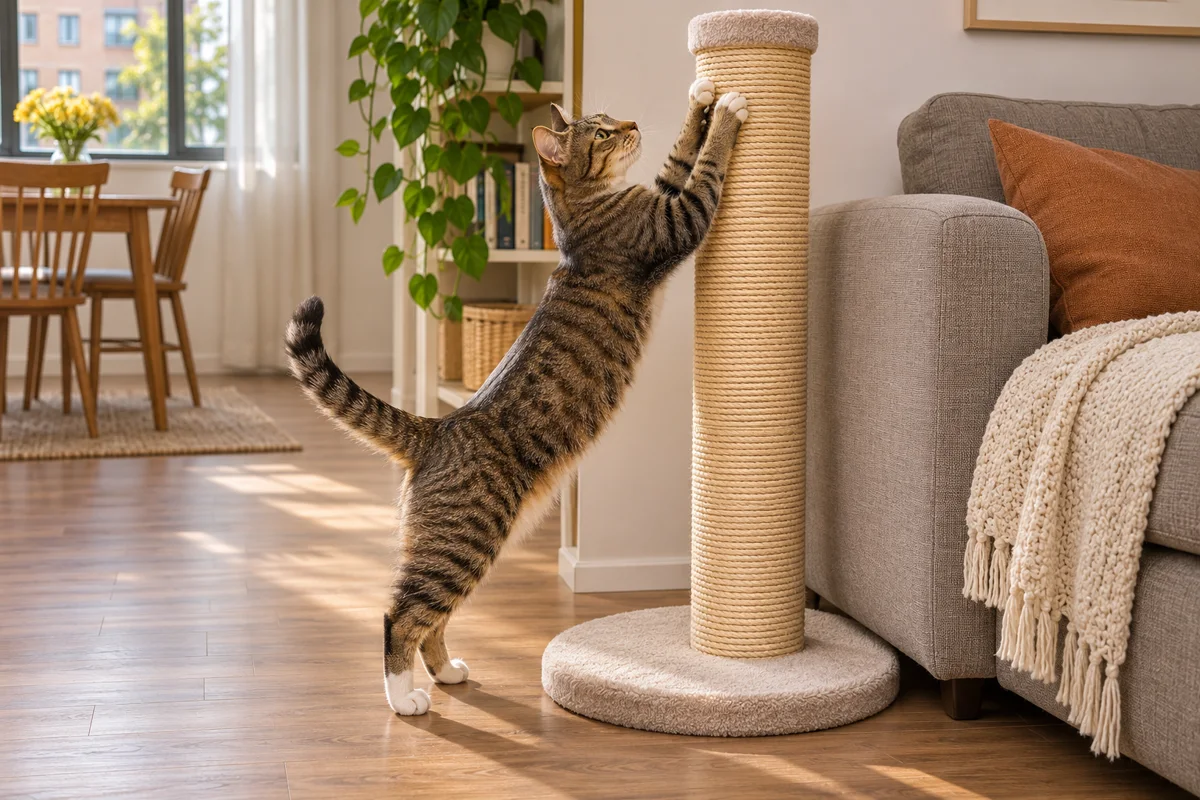
Put the first scratching surface beside the place your cat already scratches or just off the route from their favorite resting spot. Match the angle they use. A cat that reaches up the arm of the sofa should have a stable upright option nearby, while a cat working at the rug may prefer a flat pad. You can begin with one good location and add a second only when you can see what it would do.
The best location is one the cat can reach and leave easily while you can still use the room. A post tucked behind the sofa takes up little visible space, but it may be awkward for the cat to approach. A large tower in the middle of a tight hallway may be inconvenient for everyone. Move a piece of paper around the floor to try the footprint before you shift furniture or buy anything.
See the three placement checks
Video summary: Start near the usual spot, match the scratching angle, and check the base.
Pick a position based on what the cat already does
| Where the cat scratches | What to set nearby | What to check |
|---|---|---|
| Sofa arm | Stable upright scratcher beside the arm | Enough space to stretch without hitting the sofa |
| Rug edge | Flat pad set just beside the usual spot | Pad stays flat and clear of the walking route |
| Beside a favorite bed | Upright or flat surface along the route away from the bed | The cat can leave either way without crossing your feet |
| Hallway corner | Narrow stable post or flat board in a recess | Door opens fully and the cat can move away comfortably |
| More than one room | One surface near the most-used spot, then a second if needed | Each surface serves a place the cat already visits |
1. Watch the room before rearranging it
For a day or two, note the places where the cat stops to scratch when nobody is calling them over. You might see the cat reach for the corner of the sofa after coming down from a nap, or work on the rug in front of the bedroom door. Write down the spot and whether the cat is reaching upward or working along a flat surface. That information helps you choose the first location.
Notice how the cat gets there. If the cat walks between a chair and the side of a sofa, moving the chair might change what makes the spot appealing. Set the scratcher off the route while keeping it close enough to the original position that the cat can discover it on an ordinary walk through the room. In a home you share with another cat or dog, make sure the arrangement leaves a clear exit and doesn't force animals to approach one another.
Watch for the easiest location to live with. If a post next to the sofa would stop a drawer opening or leave no room for someone to sit down, try the other side of the arm or a flush position alongside the sofa. You should be able to vacuum around it and notice bits of cardboard or loose fibers. A spot that requires you to move the post every evening is unlikely to stay consistent for the cat.
2. Check stability and reach before you offer it
Set the scratcher on the surface where it will normally sit. Press gently at the height where the cat would reach. If the far side of the base lifts, or if the scratcher slides on the tile, find a steadier setup. On carpet, test it where it will sit, because a base that feels level on a shop floor can rock on a thick pile. Follow the manufacturer's installation instructions for any mounted scratcher, and only attach it to a surface suitable for the hardware.
For an upright model, look for enough usable height that your cat can put their paws up and extend without running into a shelf above. Leave clearance where the cat puts their back feet. For a flat pad, check that the frame and corners sit flush and the textured surface doesn't flip or slip when pushed. If the cat already chooses a sloping surface, an appropriately stable angled pad can be worth trying.
Look over the surface for exposed staples, loose pieces and seams that are coming apart. Replace a damaged item or follow the maker's instructions for renewing the scratch panel. If the scratcher came with furniture, make sure all its fasteners are tight and its base is positioned as intended. A cat needs to feel the surface hold steady as it pushes off. Recheck a freestanding post after you move it onto a different floor.
3. Try one change long enough to see what happens
Start with the post in the chosen location, then go back to using the room normally. Give the cat chances to investigate without picking them up or putting their paws on it. You can sit nearby and let the cat approach when they want. If they use the sofa again, note where their paws land. The post may be out of reach from the path they actually take, or it may feel too low or too narrow once they stand next to it.
Make one adjustment and observe again. You could shift the post a little closer to the original spot, or try a flat pad if the cat has been working along the rug. Avoid changing the angle, material and location simultaneously. It's hard to tell what mattered if every part of the setup looks different the next time the cat enters the room.
If you're bringing a cat home for the first time, set up one stable scratcher along a clear route in their quiet first room. Wait until the cat is exploring comfortably before treating the rest of the apartment as a single space to arrange. Once the cat starts using the sofa area or another room regularly, you'll have more information about where to add a second scratcher.
4. Keep the setup workable for everyone
Leave a surface in place if the cat uses it and it doesn't interfere with the room. Clear up debris the way its maker recommends and recheck loose fittings. If you decide to move a successful post, try a small move first and see if the cat keeps using it. The place you want the post to end up is easier to reach gradually when the original location already makes sense to the cat.
A second scratcher can help when a second area is easy to distinguish. For example, a pad beside the hallway rug and a post by the sofa fit different movements and different routes. Put each one where you can see them in use. In a studio, a reachable vertical surface and one flat pad can be enough to learn what the cat prefers without consuming the center of the room.
Frequently asked questions
Should I put the post right against the sofa?
Place it close enough that the cat finds it from the same route, with room for the cat to stand and stretch. Check whether the base rocks against the sofa or catches a rug edge. Move it a little if the cat has to squeeze around it.
Why does my cat ignore the scratcher at the end of the hall?
Check the usual routes first. If the cat rarely stops there, move the scratcher toward a resting spot or a surface they already use. Confirm that it's steady and that its angle matches the way they scratch.
What if there is no room for a tall post?
Try a flat pad that fits beside the original spot. If the cat consistently reaches upward, consider a suitable wall-mounted option installed according to its instructions, where you have permission to attach it. Leave the floor below clear so the cat has steady footing and room to turn.