How to turn a deep windowsill into a stable cat observation spot
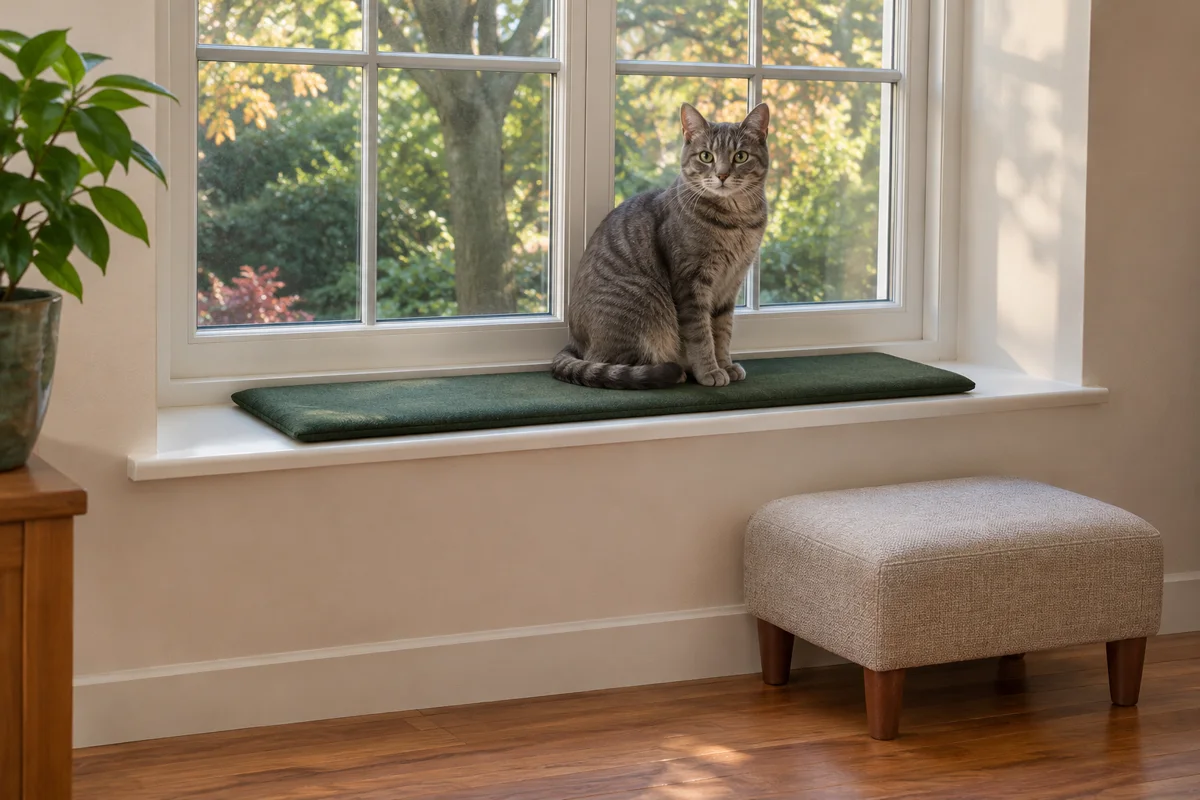
Start with a securely closed window and a sill deep enough for your cat to sit and turn without stepping on a loose cushion or overhanging edge. Clear the sill and watch how the cat approaches it from the room. If the jump is awkward or the surface feels slick, give the cat a stable route or use a resting spot a little farther back. You can offer a view from a low piece of furniture without using the sill itself.
A good window spot gives the cat a place to look out and an easy way to get down. It should still work when curtains move, when someone walks past with laundry and when the afternoon sun heats that part of the room. Take ten minutes to check these details before adding a pad or moving furniture into place. If you live with several pets, leave room for each to pass without blocking the other at the approach.
See the three window lookout checks
Video summary: Secure the window, check space to turn and clear the path down.
Compare ways to offer a view
| Setup | When it may work | Before letting the cat use it |
|---|---|---|
| Cleared deep sill | The cat already reaches it comfortably and there is enough room to turn | Check window security and inspect the surface for movement and sharp edges |
| Thin nonslip pad | The sill is wide enough but the finish feels slick | Test whether the whole pad stays flat and within the sill |
| Stable furniture near the window | The sill is too shallow or awkward to reach | Confirm the furniture is steady, rated for the load and has a clear landing |
| Purpose-built perch | A suitable mount is available and installation is permitted | Follow the maker's instructions for the surface, fixings and weight limit |
| Floor-level view | The cat prefers staying low and the glazing extends near the floor | Keep blinds, cords and movable objects clear of the sitting area |
1. Check the window before working on the perch
Close the window and test the latch from inside. If it cannot stay securely closed while the cat can reach it, choose another area until the problem is resolved. An ordinary insect screen should not be relied on as a barrier against a cat leaning or climbing. Make a clear plan for opening the window for ventilation, such as closing the cat out of that room while you open it. Everyone who uses the room should know the plan.
Look at the fittings around the frame. Move blind cords out of reach and consider whether curtains could catch around a paw or drop onto the landing. Don't put the resting spot directly against hot equipment, and remove objects such as plants, glass or loose ornaments from the route. If you water plants by that window, think about where water collects and how often you need to move the pad. A perch that stays dry is easier to inspect and clean.
Open nearby doors and drawers while the window is shut. Make sure no swinging door or cupboard crosses the route the cat would use. If your only practical approach goes over a chair that you move at mealtimes, think ahead about where the cat would land when the chair is gone. You can use a different window or arrange a lower, steady piece of furniture that stays in place.
2. Measure the usable space, not just the sill
Measure from the inside of the window frame to the front edge and subtract the space occupied by any trim, handles or curtain tracks. Look at the whole length. A deep area in the middle can narrow at the ends, exactly where a cat may turn to get down. Put a piece of paper on the surface temporarily to mark the part that is actually usable. Remove it afterward so it cannot slide under paws.
Check whether the sill and the surrounding surface are in sound condition. Look for loose trim, water damage, rough edges and any section that shifts under light hand pressure. If you are not sure whether the structure can take your cat's weight, use stable furniture designed for the load and keep the cat off the sill. A thick blanket does not make an unstable surface steady or give a narrow sill more usable depth.
If you want to add a pad, choose a thin one that fits entirely within the available area. Push it gently in several directions and watch whether it wrinkles or shifts. If it slips when you press it with your hand, remove it and try a safer arrangement. Wash the pad according to its care instructions and check its grip again once dry. Loose covers can behave differently after a wash.
3. Make the trip back down as easy as the trip up
Watch the cat during an ordinary move to a nearby chair or sofa. Use what you see to plan a route with comfortable steps and open landings. A cat that routinely pauses before a jump may prefer a lower resting surface. Check that the cat can face the room and step down without twisting around a plant or jumping over a basket. You can observe the route without putting the cat on the sill yourself.
If you add furniture, check that it sits flat and will not tip or shift when approached from the side. Follow any anchoring instructions. Keep the landing clear of hard objects and give the cat room to move away after getting down. In a narrow room, turning the furniture or using a lower platform can be easier than asking everyone to walk around the same bottleneck. The scratcher placement guide has another way to check whether a familiar route still works after you add something.
Give the cat a choice. Clear the route, then leave the spot available while you use the room normally. A cat may sit on the lower step first, or choose a quiet corner instead. If the cat investigates once and leaves, wait before making more changes. Try observing at a different time of day to see whether light, warmth or noise changes how the cat uses the space.
4. Recheck the spot as the room changes
Check the pad and furniture after opening curtains, cleaning or moving a chair. Look for a curled corner and for objects that have migrated into the landing area. If sunlight makes the spot warm later in the day, leave another resting place where the cat can move out of the sun. If outside activity repeatedly startles the cat, give them an unobstructed route to a quieter place.
For a new cat, keep their quiet first room available while they explore. Offer the window area later once it is secure and the rest of the home is set up. If two cats want to use the same narrow access route, add a second place to look out or rest. That gives them options without asking either one to pass the other on a sill.
Frequently asked questions
Can I open the window a little while my cat sits there?
Keep the window securely closed while the cat has access unless there is a suitable barrier correctly installed for that window and situation. If you need ventilation and are unsure about the setup, secure the cat elsewhere first.
Is a cushion all I need on a deep sill?
Check the window, usable depth, footing and route down before choosing a cushion. A thin pad that stays flat may help on a smooth surface. Remove anything that hangs over the edge or moves under light pressure.
What if my cat ignores the window spot?
Leave it available if it is safe and the cat can still use their familiar resting places. A lower lookout may suit them better. You can adjust the room based on what the cat already chooses without lifting them onto the sill.