How to rotate indoor cat toys and keep a simple activity journal
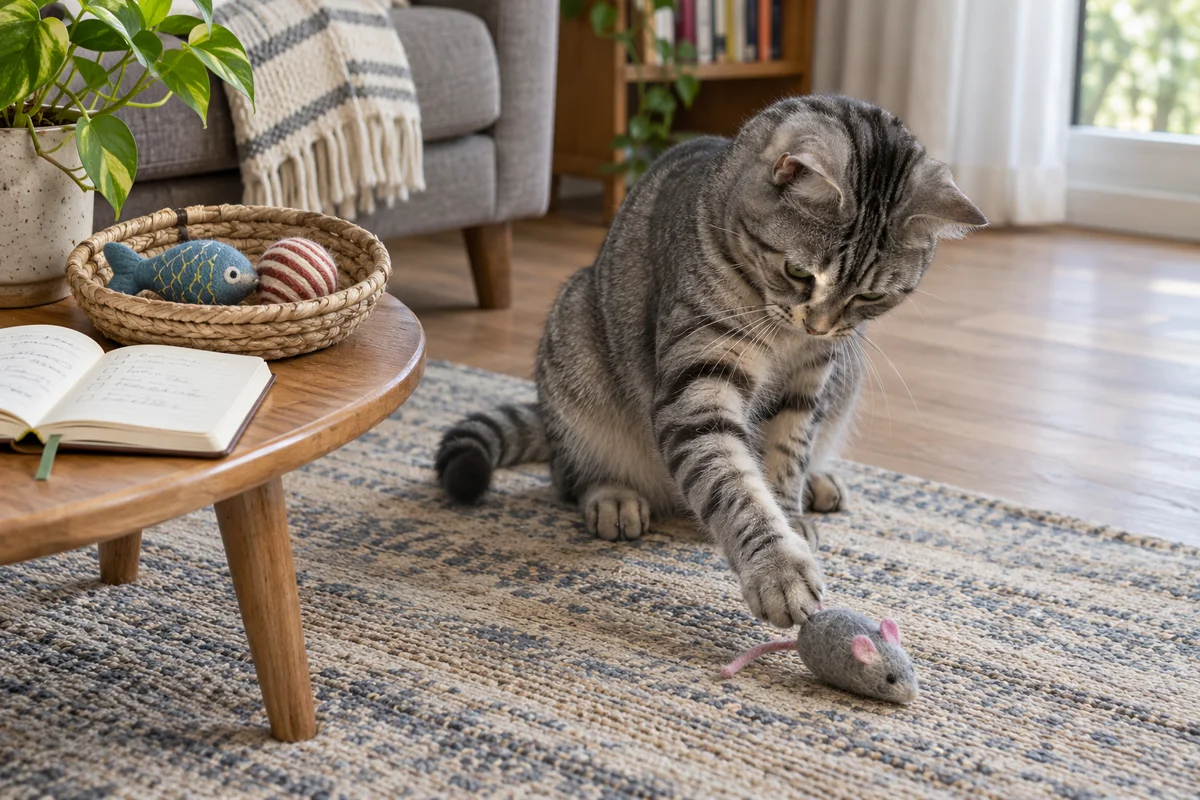
Keep a small selection of familiar toys available, offer one different toy during a short play session, and write down what your cat actually does. Leave reliable favorites in the rotation. After a few sessions, your notes can show whether the cat prefers to watch, stalk, chase or carry a particular toy, and whether the room or time of day makes a difference. You can use the toys you already have and keep the notes on a slip of paper by the storage box.
Sort out which toys you can leave out and which are for supervised use. Put wands, strings and toys with loose attachments away after play. Before putting any toy into rotation, check its condition and how the cat uses it. If a cat chews a toy and can pull pieces off, take it out of use. Base the rotation around a few sound objects you know how to handle and clean.
See the three parts of the toy rotation
Video summary: Offer one toy, watch what happens and record how the game ended.
Choose what to offer and what to record
| What you offer | Setup | What to note |
|---|---|---|
| Familiar soft toy | Set it in view on open floor | Whether the cat watches, approaches, bats or carries it |
| Toy rolled along a rug | Use a clear strip and roll it slowly | Whether the cat follows the movement or stops when it changes surfaces |
| Supervised wand toy | Move it away from the cat and pause within reach | Whether the cat prefers a slow approach or a short chase |
| Same toy in a different room | Keep the speed and play method similar | Whether the other room changes the cat's willingness to join |
| No new toy, ordinary quiet time | Leave the familiar resting places accessible | Where the cat chooses to settle and whether they return to initiate play |
Keep the entries simple. An example is “After dinner, felt toy on living room rug. Watched the first pass, caught it twice and then left.” That gives you enough detail to try the same setup later. Avoid describing a cat as bored because they didn't chase once. A door opening, a visitor or a change in footing can explain why the cat stayed where they were.
1. Take inventory before choosing the rotation
Gather the toys you actually use and look at each one in daylight. Check seams, attached parts and cords. Set aside anything you cannot clean or that has come loose. Keep supervised toys in a closed storage place you can reach easily. Put ordinary intact toys in a separate shallow box so you can see what you have without tipping everything onto the floor. If another person shares the home, agree on which items go back into closed storage.
Think about the job each toy serves. One may be useful for a short chase across a rug. Another might be something the cat carries around when the room is quiet. If most of the toys do the same thing, you don't need to make each one its own day. Use one you know works and change one part of how you offer it. You could move it more slowly, use a different clear spot or stop sooner.
Avoid moving a familiar scratching surface or resting spot as part of the toy rotation. Those places serve other needs and are useful reference points for noticing how the cat behaves. If you want to introduce a new texture as a separate change, follow the scratch-texture guide and keep at least one familiar scratching option accessible.
2. Pick a place and a play window you can repeat
Choose a familiar room with steady footing. Move cords and breakable items out of the way and leave a clear path away from the game. If the cat likes to watch from a bed or box, let them stay there while you start. Offer the toy on open floor rather than waving it close to the cat's face. In a busy household, a quieter part of the day may be easier to repeat than a session that starts when everyone is walking through the room.
Give one toy a few simple passes. Pause where the cat can see it and let them catch it if they choose to follow. The first time, keep the same pace and route as a familiar game. You can use the indoor play circuit if you need a clear beginning, pause and finish. Stop after a successful catch or when the cat moves away.
If more than one cat wants to play, use separate turns when one cat tends to take over. Write each cat's name beside the note. The fact that one cat played with the wand while another stayed behind the sofa can mean something about who had space to approach. Try a separate session before making a decision about whether the second cat likes that toy.
3. Record behavior you can see
Use four fields: when, what, how and finish. For when, write something useful such as “before breakfast” or “late afternoon.” For what, identify the toy. For how, specify the location and the movement you used. For finish, write what ended the session. “Left to sit on the windowsill” is enough. You don't need to log every second or assign a score.
Read what you wrote after several comparable sessions. You may find that a toy worked on a rug and drew no interest on smooth tile. That is a reason to try the rug again before retiring the toy. Or you may notice a cat always joins for the first few passes and leaves when you speed up. Try keeping the pace steady next time. The journal is there to help you choose the next small test.
Give each change a chance to be clear. New room, new toy and a new time of day make it hard to tell what mattered. If testing a toy, keep the room and movement similar. If testing the room, keep the toy familiar. Ordinary household conditions will vary, so keep the notes short enough that you can take them even on a day that doesn't go to plan.
4. Make the next rotation from your notes
Keep the choices that work and put the rest away for later. If you write out a plan for a few days, use it as a reminder. You can repeat a session if the cat initiates it, switch to quiet time if the cat wants to rest, or clear the game when the room becomes busy. Check toys again before returning them to rotation, especially after washing or after a few weeks in storage.
If someone is caring for your cat while you're away, leave a short description of a favorite game and where the supervised toys go afterward. Include a note about the usual way the cat stops playing so the sitter can leave them space. For a cat who recently arrived, keep play short and use a familiar location like their quiet first room before trying a busier area.
Frequently asked questions
How often should I rotate toys?
Start by changing one option when you have enough observations to decide what to try next. A favorite toy can stay available if it is safe to leave out. Use the cat's response and the condition of the toys to guide the timing.
Should I record sessions where nothing happens?
Yes, when you can name what you offered and where. A short note that the cat watched from the bed and stayed there is enough. Similar notes collected over several occasions are more useful than one missed chase.
What should I do if a favorite toy wears out?
Take damaged toys out of use. Look for a sound replacement with the same practical features, such as a light shape the cat can bat along the rug. Offer it in the familiar place and record whether the cat uses it in the same way.