How to introduce a new scratching texture to your cat
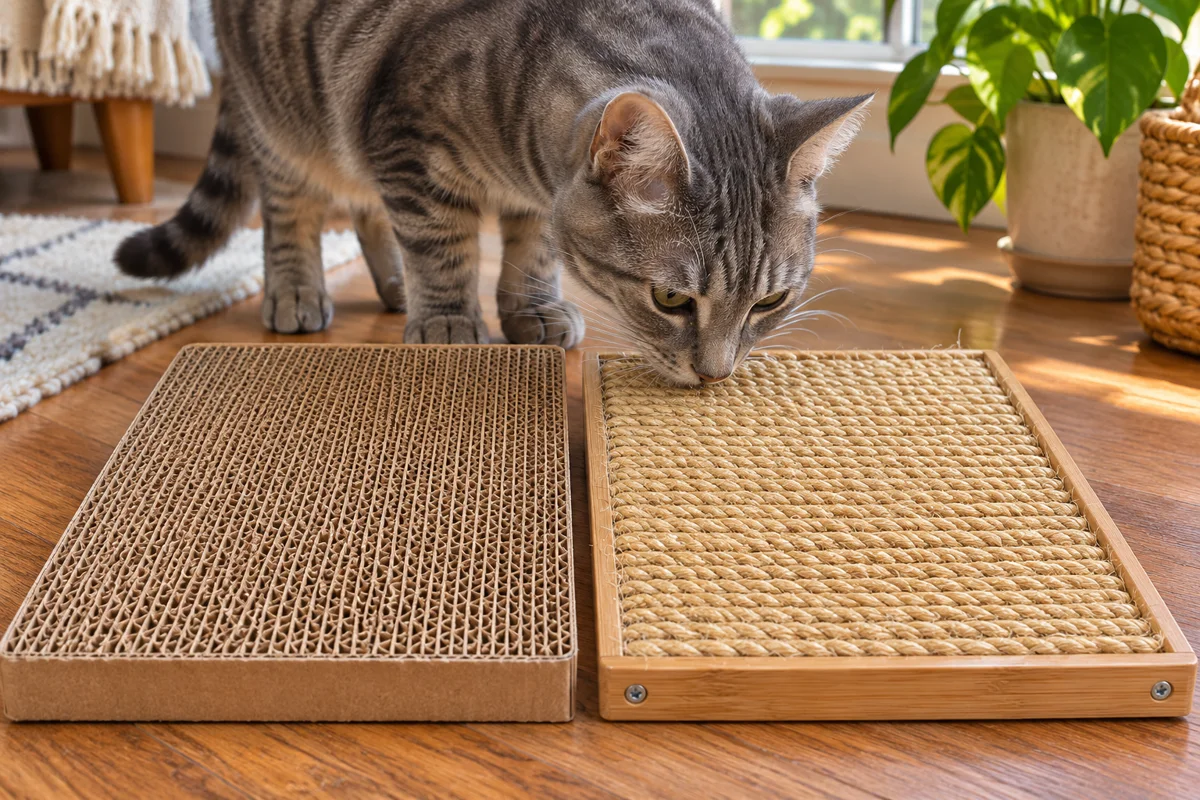
Set the new surface beside a scratcher the cat already uses. Match the old scratcher's angle, keep both steady and leave the approach clear. Give the cat time to visit either one while you go about your normal routine. If a cat stretches up the old post, an upright sample beside it makes a more useful comparison than a flat pad placed across the room. You want to see what they do when the material is the main thing that changed.
Choose a surface you can inspect and keep clean. Corrugated cardboard, tightly wrapped sisal and woven scratching panels feel different under paws. Each can also come attached to a different base, so handle the complete product before setting it out. A solid rope post and a loose board differ in more than their texture. A cat that leaves the board alone might be reacting to the movement rather than the material.
See how to compare two textures
Video summary: Keep the old scratcher, match its angle, and watch which stable surface the cat chooses.
Compare the textures on a steady surface
| Texture | Practical feature | What to check before use |
|---|---|---|
| Corrugated cardboard | Easy to try as a replaceable flat pad | A stable holder and no exposed staples or loose packaging |
| Woven sisal | A flat or upright panel can give an even scratching surface | The edges are secured and the panel doesn't shift |
| Sisal rope | Common on posts that let a cat stretch upward | The wrapping is tight and the base doesn't rock |
| A manufacturer-approved replacement panel | Often fits a familiar frame the cat already uses | Confirm the fit and attachment method, and check that the edges sit flush |
Look at the old scratcher before choosing a new one. The part the cat uses most often tells you more than the product name. The center of the panel may be worn smooth while the lower corners are untouched. On a post, scratches at a particular height can show where the cat can comfortably extend. Use those observations to decide what stays the same in your first trial.
1. Keep the familiar scratcher available
Find the old scratcher in its normal position and watch how the cat approaches it. Does the cat use it after leaving a bed? Is it close to the edge of a chair? Is the cat coming around a corner or reaching from a rug that gives good footing? Leave the original where it is while you try a second surface. If it has become damaged, remove the hazard and replace the worn part with an equivalent safe option before experimenting.
Put the new scratcher to one side of that route. Make sure the cat can approach it from open floor and turn away without being blocked by a wall, a table leg or another cat. For two upright objects, check that neither one touches the other when pressed. A post that bumps its neighbor may feel less steady even when it has its own solid base. The guide to cat scratcher placement has room-by-room suggestions if you need more space.
Keep the usual route through the apartment clear. If you cannot put the two scratchers next to each other without blocking a door, set the new one farther along the same route. Try to preserve the angle and the floor surface. That makes it easier to compare the two options even if you can't arrange them side by side.
2. Test the new panel before the cat uses it
Press the scratching surface at the likely height of the cat's paws. Check whether the base rocks or the frame shifts. For a flat pad, push it gently toward each corner. If it curls, rattles or slides, resolve that before you leave it out. Follow the maker's instructions if it uses replaceable pads or wall fittings, and install it only on a surface that can support it.
Look closely at the join between the material and the holder. Some cardboard inserts fit tightly in one direction and sit proud if installed the other way around. On a woven panel, check the border for loose fibers and fasteners. A rope post should hold firmly from base to top. Inspect equipment regularly and take it out of use if pieces start to separate and could be chewed or swallowed.
Pay attention to how the room sounds when you touch the scratcher. A hollow plastic tray on tile can knock even if it doesn't move far. Move the tray to steady footing or use a compatible base. Let the cat see the new object when the room is quiet. You can continue normal household activity once the setup is in place, but avoid demonstrating by scraping your nails across it if that sound makes the cat move away.
3. Watch how the cat uses the two options
For the first few ordinary opportunities, note what happened instead of trying to get a reaction. The cat may sniff the new surface, sit near it, scratch it, or keep using the old one. Watch where the back feet land and whether the cat can extend comfortably. If the cat starts and immediately steps back, test the new surface again for rocking and look at the space behind it.
If the new texture stays unused, change one thing. You can make its location slightly closer to the route, or test the same material in the angle the cat normally chooses. Leave enough time between adjustments to see the setup in normal use. Try looking after naps or during a quiet period when nobody is standing over the cat. You may notice the cat is more willing to investigate when they are coming from their usual resting place.
Allow both surfaces to remain if both are useful. If the cat consistently chooses one and the other takes up needed space, make a small adjustment and watch again before taking a working option out of the room. In a multi-cat home, keep separate access routes. A single cramped corner can make it look as if a texture is unpopular when the real issue is reaching it without passing another animal.
4. Use the result when you replace worn equipment
Write down the details that mattered: the angle, the part of the room, how the material attached and whether the base stayed still. That gives you a practical shopping list when a panel wears out. If you replace an insert, compare the new and old panels before you discard the old one. Confirm that the replacement is secure and check how the cat approaches it after the change.
For a cat who has only recently arrived, keep their first room and the resources they already use available while you experiment elsewhere. A new material is only one change in the home, and the cat can decide whether to use it. When you find a reliable combination, leave the approach clear and inspect it during your usual cleaning.
Frequently asked questions
Should I put my cat's paws on the new scratcher?
Put the material along a familiar route and give the cat a choice. You can observe from nearby. A cat that walks past it may need a different angle, more space to approach or a steadier base.
What if cardboard shreds all over the rug?
Check the holder and remove loose pieces during cleaning. If the cat chews or swallows pieces, remove that option. A securely attached panel with a different texture may be easier to use and maintain in that spot.
Can I replace the texture on an existing frame?
Use a replacement the maker identifies for that frame and follow the installation directions. Check that it sits flush and the frame remains stable. Give the cat access to another familiar scratching place while the replacement is being tested.