How to add raised resting spots for a cat in a rental
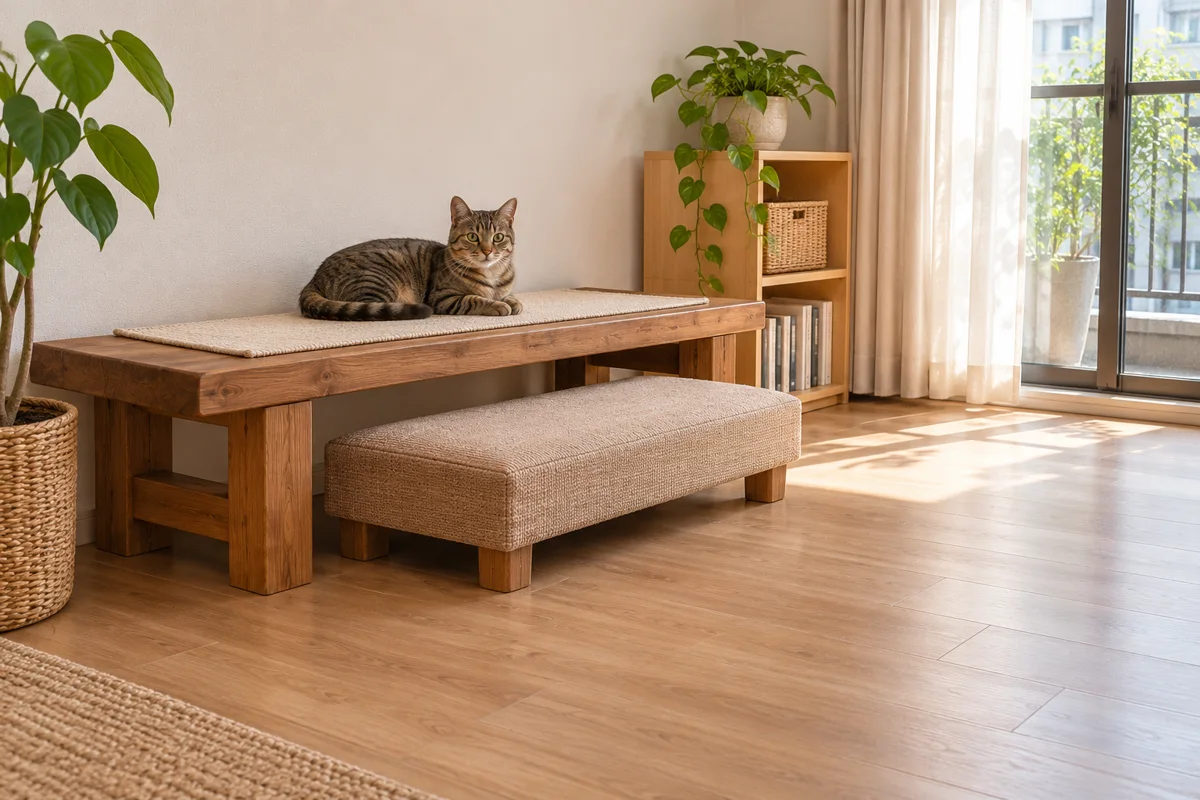
Start with a sturdy low piece of furniture you already own, clear its top and give your cat an easy way back to the floor. A chair with a firm seat or a low bench can provide a usable first perch without changing the walls. Check that it stays still when approached from the side, and place it so your cat can land on a clear surface. If a piece needs to be anchored to be safe, use the specified anchors with permission or choose a lower alternative.
Plan from the routes your cat already uses. A favorite chair may be a better starting point than a tall shelf in a corner the cat rarely visits. Watch one ordinary evening before moving anything. Note where the cat starts, where they pause and how they get down. Give them the option to look out from a slightly higher place and then leave without turning around in a narrow gap.
See the three perch setup checks
Video summary: Start low, test the base and clear the landing.
Compare rental-friendly options
| Setup | Where it can work | What to check |
|---|---|---|
| Low solid bench | Quiet stretch of wall with an open landing | Feet stay flat and the bench does not shift sideways |
| Sturdy existing chair | A room where the chair remains in one position | Seat is firm and the cat can descend without hitting a table leg |
| Low purpose-built cat stand | A spot where everyday furniture cannot be spared | Instructions, load limit, base stability and required anchoring |
| Deep, secure window sill | Cat already reaches and leaves the sill easily | Window security, useful depth and a clear path down |
| Wall-mounted perch with permission | A situation where proper installation and support are available | Approved fixings, wall suitability and the manufacturer's instructions |
Furniture that's stable when you sit in the middle may react differently to weight at one edge. Check the actual piece and its instructions. Avoid narrow stands, furniture on wheels and stacks of boxes that can shift independently. If you can't make an elevated setup stable, give the cat a floor-level viewing or resting spot and use your efforts on making that place comfortable and easy to reach.
1. Map the route before moving the furniture
Stand where the cat normally approaches a chair or sofa. Follow the way the cat would move across the floor. Look for blind corners and places where hands, feet or another animal might be in the way. If the cat would have to leap over a laundry basket on the way down, move the basket or try another spot. A landing should remain clear even when the room is in ordinary use.
Next, look above the proposed spot. Remove cords and breakable objects the cat could reach. Keep the perch away from hot equipment and unstable decorations. For a perch near a window, check the window can stay secure, and deal with blind cords before the cat gets access. The window lookout guide explains how to evaluate a sill and decide when to put the furniture farther back.
Check how the setup fits the rhythm of the room. Do you pull the chair out each time you eat? Is the bench where people leave parcels when they come home? Use something that can stay in place and keep the approach open. A guest-friendly spot can also work for the cat if guests know to leave part of the seating area clear.
2. Check the footprint and steady the top
Move the piece into position without asking the cat to try it. Set it on a flat section of floor. Gently press from different directions, then apply light pressure near each edge to check whether it slides, rocks or tips. If one foot sits on a thick corner of a rug, put all feet on the same surface. If you detect instability and cannot resolve it according to the maker's instructions, take the furniture out of the plan.
The surface needs enough usable space for your cat to sit, turn and face the room. Put proposed bedding down and push it from each side. A thin pad that stays flat can make a firm seat easier to use. A thick cushion that pushes up at the edge or moves when pressed can make the top feel unreliable. Remove anything that hangs into the way down.
If a raised platform is purpose-built, assemble it fully before use. Read the instructions even if the unit appears self-supporting. Some cat furniture relies on fixings that prevent it from overturning when a cat jumps sideways. A rental constraint is a reason to choose equipment suitable for the room, with permission for any required installation.
3. Give the cat a route up and down
For a cat that already uses a low chair comfortably, leave the area in front empty. For a cat that prefers smaller steps, use a low, stable piece the cat can approach without slipping. Test each piece separately and leave an open landing so the cat can choose to step straight down or take the longer route. Avoid creating a series of narrow jumps between objects.
Try leaving the new space available while the room is quiet. Let the cat approach on their own. Observe at least one return to the floor before deciding the setup works well. A cat may jump up easily and then hesitate while looking for the first step down. If the route looks awkward, clear more floor space or lower the resting spot. Don't lift the cat onto a platform to test it.
Keep other resources easy to reach from the floor. The perch should be an option to rest, rather than the only place a cat can reach water, food or a quiet hiding spot. In homes with several cats, give each one a way to pass without getting trapped between two pieces of furniture. The first room guide shows how to arrange a retreat alongside everyday resources.
4. Recheck the spot after normal use
Look again after cleaning, after moving chairs or after washing the pad. Check that the base still sits flat and that the step has not drifted out of line. If a folded blanket slowly bunches near the edge, remove it and use a better fitting pad or a suitable bare surface. Rechecking takes less time when you can reach both ends of the piece without moving everything else in the room.
If you later want a second perch, decide what it adds. A lower place by a different window may be more useful than a taller one next to the first. A second spot also gives cats a choice if a favorite place is occupied. Reuse the same stability and access checks with every change. You can improve the room over time once you have seen which spots the cat is actually using.
Frequently asked questions
Can I use removable adhesive strips instead of wall fasteners?
Use the mounting method specified for the perch and approved for the wall. Ordinary adhesive strips are not a substitute for required hardware. Choose a low stable option if you can't install the perch as directed.
Does a cat need a tall perch?
Start with a height the cat already approaches comfortably and can leave easily. A low bench can offer a useful view and resting place. Watch how your cat moves before adding height.
What if the cat jumps over the step you added?
Observe where they land. If the chosen route is comfortable, steady and clear, the step can remain an optional route as long as it doesn't get in the way. Move or remove it if it narrows the landing or makes other furniture unstable.