How to choose a cat litter mat and make cleanup easier
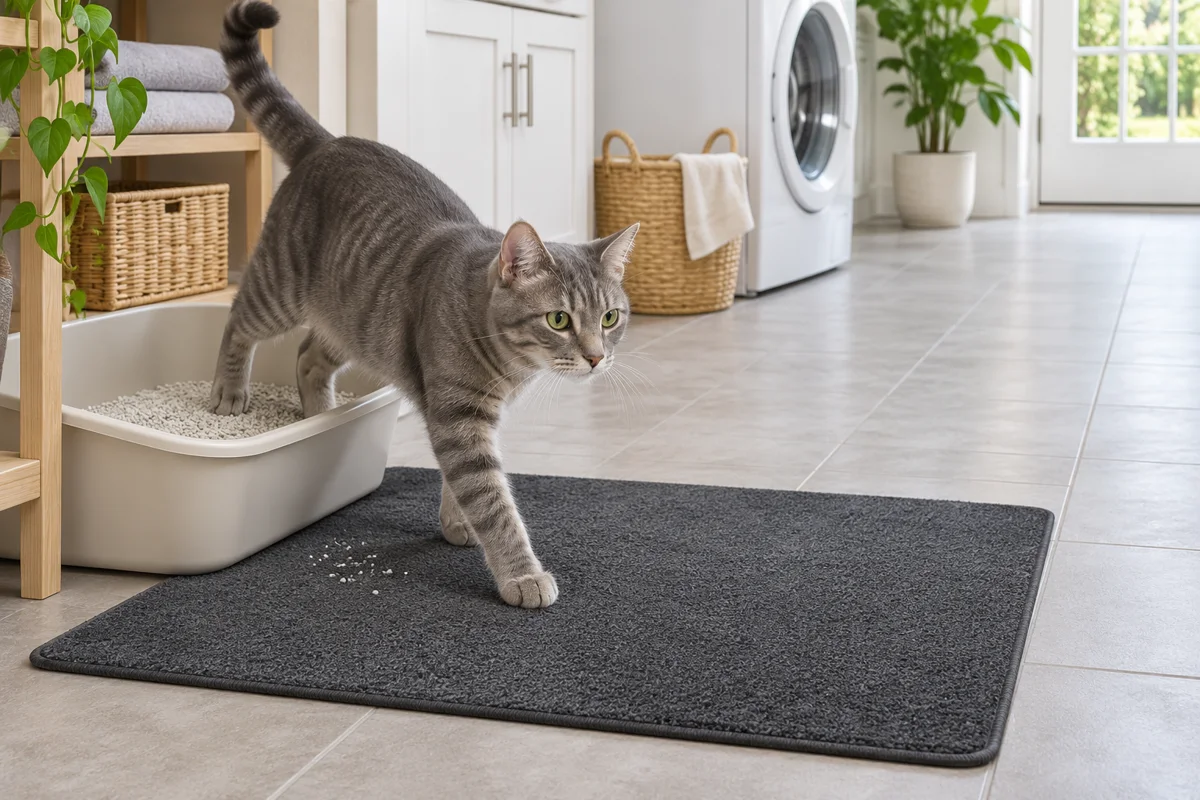
Put a flat, stable litter mat where your cat already steps after leaving the tray. Choose a surface you can lift, empty and clean without spilling grit across the room. Compare the options using the litter you already have, and check what collects underneath after a few ordinary uses. In a narrow spot, a small mat that sits in the right place may catch more than a large one that pushes the cat to step around it.
Watch the route out of the tray before buying a mat. Some cats take several steps straight ahead, while others turn to the side immediately. Leave the tray opening and that route clear. Test any new mat for sliding or curling, and make sure there is room for the cat to leave freely. If the cat avoids the area or starts using the tray differently, take the mat out and check whether the familiar setup works better.
See the three litter mat checks
Video summary: Follow the usual exit route, keep the edges flat, and clean underneath.
Compare mats by what you need to clean up
| Surface | Where it can help | What to inspect before buying |
|---|---|---|
| Flat waterproof mat | A spot where you need to see and wipe up grit or moisture quickly | Whether the backing grips your floor and the edge lies flat |
| Ribbed or textured mat | A route where dry litter rolls toward the door | Whether the grooves are wide enough to sweep or rinse easily |
| Two-layer mat | A larger area where dry litter collects between layers | How the layers open, empty and dry after cleaning |
| Washable fabric mat | A dry spot where you prefer laundering to rinsing | Care instructions, grip and whether grit is easy to shake loose first |
| Bare cleanable floor | A narrow exit or a cat that avoids mats | Whether you can sweep the route without moving the tray every time |
Use the design as a starting point. Two mats that look similar in a photograph can behave differently once they're lifted or washed. Inspect the place where one layer meets another, the height of the edge and the side that touches the floor. If the mat comes folded, give it time to settle as directed and check it again before allowing access. Edges that stay raised can interfere with paws and feet.
1. Find where litter actually lands
Clean the floor around the tray once, then check after the cat has used it normally. Look for the first small group of grains. Notice whether most land in front, at the side or farther along a wall where the cat turns. Check whether a door or cupboard moves over that patch. Trace the route with your eyes from the opening of the tray. You might discover a smaller mat would cover the part of the floor that matters most.
Consider how you clean the spot. If you have a brush and dustpan, make room to bring them alongside the tray without shifting the cat's setup. If you lift the mat to empty it, check that you can carry it flat to the bin. A mat that is easy to use in an open utility room may be awkward in a narrow bathroom where you have to turn it sideways to get out.
Leave enough space for the cat to choose a different path. This is particularly important when there is another pet in the same room or when the tray sits in a tight corner. Try to keep the familiar route to food, water and a resting place out of the cleanup area. The quiet first room guide shows how to position those essentials separately without making the path to any one of them difficult.
2. Test the mat on the floor you use
Place it flat and press gently near each edge. Check for curling, rocking or movement. Move your foot lightly over a corner to see whether it lifts. Open nearby doors to make sure none catch the edge. If the mat has two layers, check that the top stays flat when the cat would step off it. Follow the maker's instructions for the type of flooring and for any grip backing.
Scatter a few clean grains of your litter onto the mat as a quick test. Brush them into a dustpan or lift and empty the mat as directed. Watch where the grains go. They should land somewhere you can reach without having to shake them out under furniture. On a textured surface, look for grains that get stuck where a brush can’t reach. Consider how that will feel during a quick cleanup in the morning.
Observe the first few uses without standing in the cat's way. The cat might step around the mat, hesitate at the edge or use the same route as before. If the mat causes a problem, remove it and try a lower-profile option after the familiar route is working again. If there is a change in toileting that outlasts the setup change or causes concern, ask a veterinarian for advice.
3. Use a pickup routine you can repeat
For dry litter, empty the mat before individual grains reach the rest of the room. Keep a small brush and dustpan near the supplies. If you use a two-layer mat, hold it low and level as you lift it. Follow the maker's instructions to open the layers over the bin. If the layers need rinsing, make sure there is somewhere to dry them separately before you put the mat back.
For a wet patch, check the floor under the mat as well as the top surface. Follow the cleaning directions for the mat and flooring, and keep the cat away from wet cleaning products. Let everything dry before replacing the mat. A damp underside can be hard to notice once the mat is back in place, especially near a wall or beneath the tray rim.
If the mat needs to come away for washing, keep the tray accessible. A clean bare floor may be easier to use temporarily than a towel that folds under feet. In a multi-person household, leave the scoop and brush in a predictable place. If a sitter will handle the area, add the emptying and disposal routine to the cat sitter handover sheet.
4. Reassess what you actually saved
After several normal uses, compare the amount of grit outside the original patch, the time it takes to empty the mat and the condition of the floor underneath. If cleanup is quicker and the cat uses the tray comfortably, keep the arrangement. If litter simply moves to the far edge, shift the mat slightly toward where the cat lands next and check again.
Replace a mat that has torn edges, loose pieces or backing that no longer stays flat. Check the floor after each change and keep the route clear. Even with a mat that works well, a quick sweep beyond the immediate tray area can help keep litter out of nearby rooms.
Frequently asked questions
How big should a litter mat be?
Measure the route where the cat normally takes the first few steps. Choose a mat that covers that patch and still leaves doors and exits clear. Placement is easier to adjust when you start with the area where litter actually lands.
What if my cat walks around the mat?
Check the edge height and whether it moves or makes noise. Remove it if the cat hesitates to approach the tray. Try a flatter option on part of the exit route once the cat is using the familiar setup comfortably.
Are two-layer mats always easier to clean?
Test how you would empty and dry one in your own space. A two-layer mat can help contain dry grains, while a flat mat can be quicker to wipe or inspect underneath. Choose the one whose routine you can keep up with.