How to prepare a calm cat sitter handover
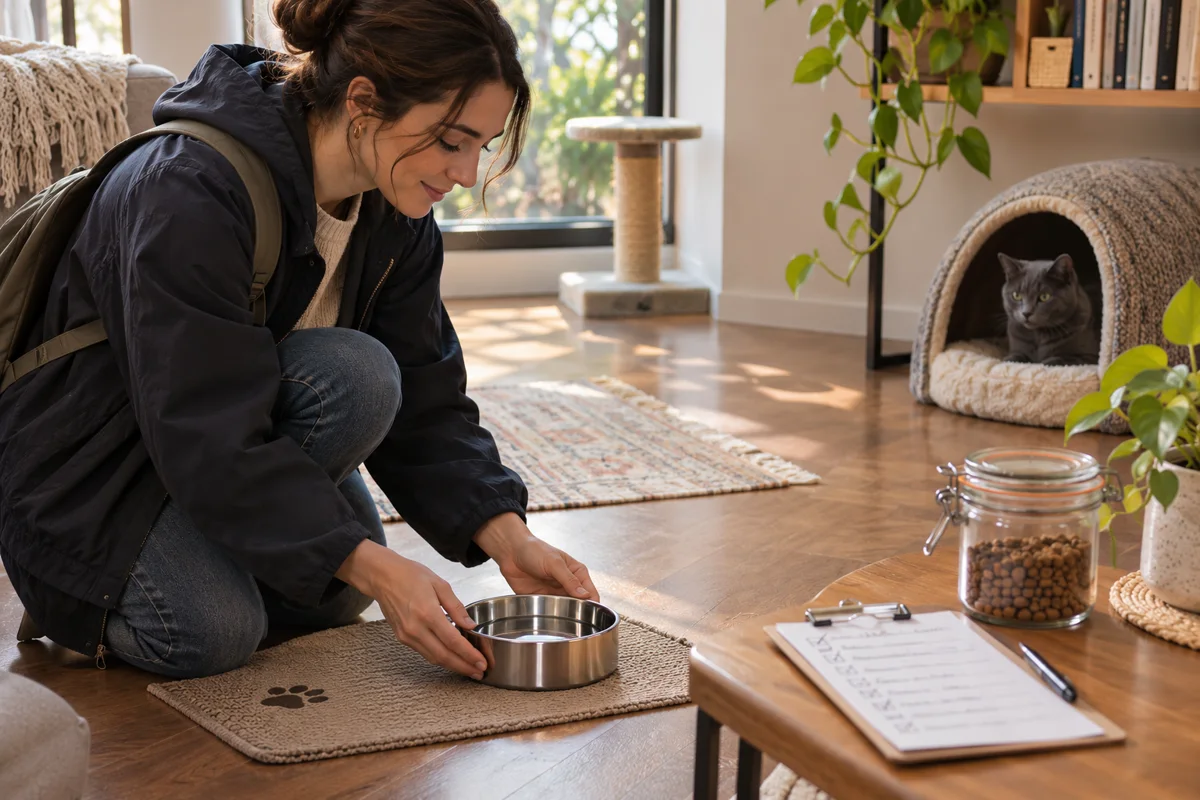
Give the sitter one page with the visit window, meal steps, water and litter locations, door rules and the contact to call if something changes. Show them a normal visit before you leave. For a cat who hides when someone arrives, agree on how the sitter can check the room quietly without reaching under furniture or repeatedly calling the cat out. The sitter should know what to look for, what to leave alone and when to contact you.
Write for someone who doesn't know your house as well as you do. “Do the litter as usual” gives them nothing to go on. “The scoop is in the blue caddy beside the tray; the waste bags are in the drawer below” makes the job easy to find. For a household with more than one cat, use names and clear identifying details. Tell the sitter which cat normally eats where and what to report if one changes their routine.
See the three handover checks
Video summary: Rehearse arrival, keep routine care calm, and agree on a visit update.
Fill in this handover table
| Part of the visit | What to leave on the sheet | Example |
|---|---|---|
| Arrival | Time window and what to do with the doors | Close the exterior door fully before opening the study |
| Food and water | Portion labels, locations and cleaning instructions | Use the jar marked Tuesday PM and refresh the water by the kitchen wall |
| Litter | Tray locations, scoop, liners or bags and disposal | The spare bags are in the drawer beside the tray |
| Quiet check | Usual hiding spots and what the cat normally does | May stay behind the open carrier while you refill the bowl |
| Play | One familiar toy and when to stop | Move the felt toy along the rug if the cat approaches |
| Update and backup | How to report the visit and who can help locally | Send the visit time, meal and tray notes after locking up |
Use the examples to write your own instructions. Keep entry codes and private access details separate from the printed sheet. If you update anything after the practice visit, send one current version. Put the visit dates at the top so the sitter can tell which version covers the trip.
1. Rehearse the first five minutes
Walk in together through the door the sitter will use. Show how to close and latch it without leaving an easy exit for the cat. Point out where the sitter can set a bag so it stays out of a walking route. If you have an interior door that should stay closed, practice what to do when the cat is on the wrong side before the sitter has to manage it alone.
Give the sitter a route to the food, water and litter. Check that they can reach each item without needing to move the cat's hiding place. Someone visiting while you're away may arrive with a coat, groceries or work gear. A place to set those things by the entrance can make it easier to open only one door at a time. Explain whether any windows are usually opened while the cat is safely elsewhere, and what you expect the sitter to leave shut during visits.
Name the usual resting places and show where the cat can be seen without disturbing them. A cat who spends most of a short visit under a bed may still move elsewhere after the visitor leaves. Ask the sitter to record what they directly saw. If the cat cannot be located when usual signs are also missing, agree in advance whom to call.
2. Make food, water and litter tasks easy to confirm
Set out or label portions according to the cat's ordinary schedule. For refrigerated meals, show the container and how it should be stored. Tell the sitter where to put dishes that need washing and how you want them to report what was left. For two cats who eat separately, write which door or divider you use and who should be in each space. If more than one person is helping, add a place to note the meal time so there is one record everyone can check.
Walk the sitter to each water source. If you use a fountain, show how to refill and confirm it is working. Leave a familiar backup bowl where the sitter knows to find it. Write down which supplies they can use to wipe the area and where you leave clean towels. Steps that sound obvious when you live in the room are easy to miss when somebody is trying to finish a visit on time.
For the litter routine, show which tools go with which tray. Include where used litter goes and where to find fresh litter if the agreed routine calls for topping it up. Ask the sitter to mention any unusual change in the tray or behavior and say who they should contact. For medication or a health condition, agree on the responsibilities before booking the visit and leave the current veterinary instructions and contact information accessible.
3. Give the sitter one quiet way to interact
If your cat usually greets visitors, show the sitter a familiar game in a room with clear footing. A short pass with a felt toy across a rug can be enough for an ordinary visit. Put away any string or wand toy afterward. If the cat prefers to watch from a safe place, ask the sitter to finish the routine and keep the visit calm. The toy rotation guide can help you describe the activity in one line.
Explain which areas need to remain available as retreats. A sitter doesn't need to draw a shy cat out to make a visit worthwhile. They can check the space at a comfortable distance and report whether food, water and litter look as expected. The quiet room guide shows how to avoid blocking the route between those essentials and the hiding place.
4. Agree how to handle a change before you leave
Write your contact, a local backup who has agreed to help, and the veterinary practice and after-hours details. State when to call you and when to contact the practice directly. Keep the carrier where the sitter can access it and show the latches on the empty carrier. Tell the sitter what to do if they will miss a visit or cannot get in, before their arrival window has already passed.
Agree on a short update that confirms the useful facts. For example, “Arrived at 6. Put down dinner, refilled both bowls, scooped the hall tray, saw Luna on the bench and locked the door.” For a cat the sitter did not see, ask for that detail plainly along with what they observed in the room. Take a minute to update the sheet after the practice visit if they found anything unclear.
Frequently asked questions
What if my cat stays hidden the entire visit?
Show the sitter the usual safe hiding places and agree on a calm check. Ask for the facts they observed and what routine tasks were completed. If the cat cannot be accounted for or there are worrying changes, the sitter should follow the contact plan you agreed on.
Do I need a separate sheet for each cat?
One sheet can work if the tasks are clearly marked by name and location. Separate cards may be easier when cats eat different meals or use different rooms. Make sure there is one shared record for anything that could accidentally be done twice.
Should I leave the entire routine in a text message?
A short printed sheet by the supplies and a matching digital copy give the sitter two ways to find it. Keep access codes out of the printed copy and confirm that the sitter is using the latest version before you leave.