How to wash pet blankets and removable cushion covers
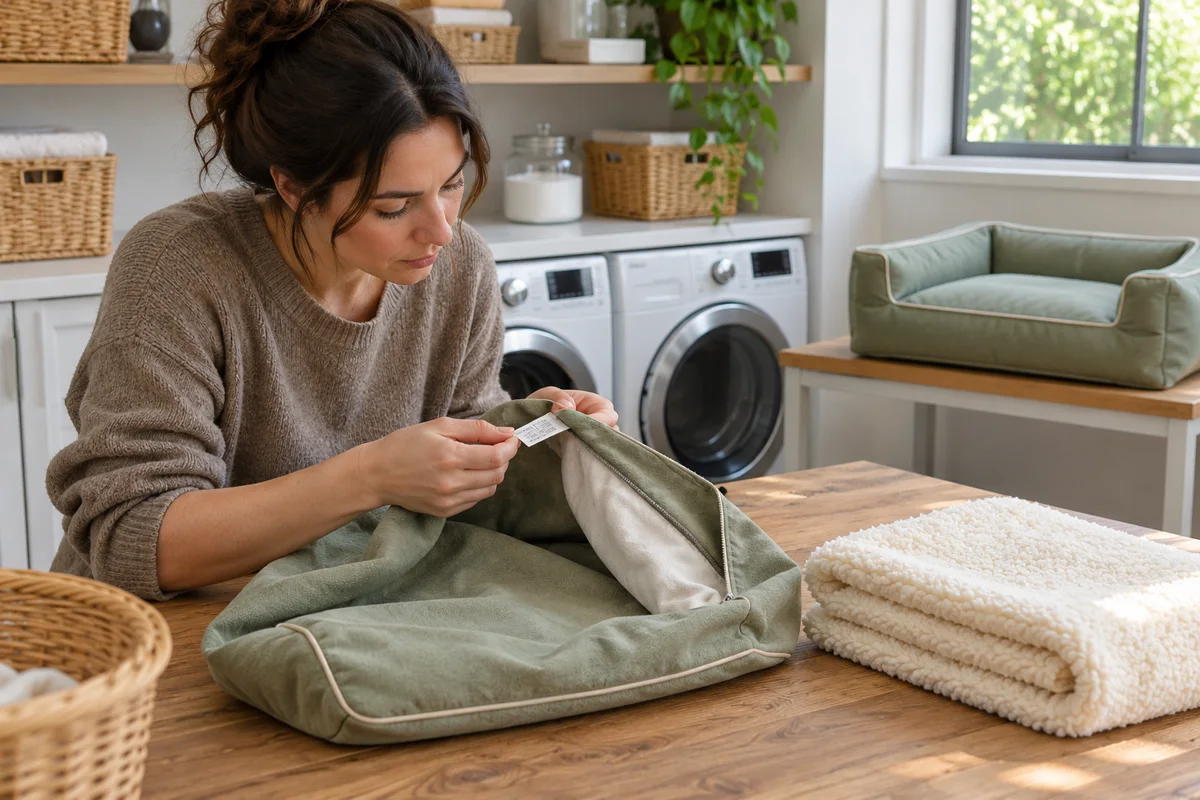
Read the care label on each piece, remove loose hair and wash only the parts the maker identifies as washable. A blanket may tolerate a different cycle from the cushion cover beneath it. A removable cover can also have a backing or trim with its own drying limits. Dry the parts thoroughly before putting them back. If you need a place for the pet to rest while everything is in the wash, set out a familiar clean cover or mat first.
Start with the piece that actually needs cleaning. Sometimes the blanket holds the hair while the inner cushion is clean and dry. Other times, a damp patch has reached the foam through a seam. Check where the dirt or moisture ends before you make the whole load bigger. Set heavily muddy items aside for separate handling. The muddy dog bed guide explains how to lift dry grit and inspect the insert before washing.
See the three laundry checks
Video summary: Read each label, lift the loose hair, and check thick seams before reassembly.
Sort the load by material and care label
| Piece | First check | What to do before putting it back |
|---|---|---|
| Simple washable blanket | Seams, wash temperature and dryer instructions | Check folded edges and corners for dampness |
| Zipped cushion cover | Whether to close the zipper and how the fabric can dry | Let the zipper tape and thick seams dry fully |
| Cover with grip or waterproof backing | Whether the backing needs different treatment | Check for curling, lifting or trapped moisture underneath |
| Foam or filled insert | Separate directions for cleaning and drying | Check the center and underside before refitting |
| Fabric with a torn edge | Whether it can be repaired safely | Remove loose fibers or replace the piece if it cannot be secured |
Set a clean towel or mat aside for the pet to use. Don't leave an exposed insert available if your pet tends to chew it. Put any parts waiting for washing in an easy-to-clean area, with wet pieces spread out where appropriate instead of rolled into a pile. If you're handling food bowls or other supplies at the same time, keep that work separate from soiled textiles.
1. Check the piece before shaking or brushing it
Turn the blanket over and look at the spots the pet lies on most often. Check for a loose thread, open seam or sharp object that may have caught in the fabric. Look under the blanket before moving the cover. Hair can collect around the zipper and corners even when the top seems clear. A worn edge or a loose zipper pull is easier to see and deal with when the fabric is dry.
For an ordinary blanket, remove loose hair using a method that suits the fabric. Take it to an appropriate area to shake if that is practical, or use a suitable brush or vacuum attachment when the label allows it. Work along the seams and edges. If the textile is wet, lift what you can without rubbing it farther in and keep it apart from clean items until you can wash or spot clean it.
Take a photo before pulling a shaped insert out of its cover. It can help you see which seam belongs under the cushion and which corner goes in first. Undo the zipper fully without tugging at the fabric. Ease corners through the opening so the zipper doesn't scrape along the foam. If the cover appears detachable but the zipper is sewn shut or the maker instructs against removal, follow their cleaning method instead.
2. Use the right method for each layer
Check the recommended cycle, load size and detergent directions. Wash similar items together only if their labels allow the same treatment. Keep anything that can snag a blanket away from it. If your washer can't handle the wet size or weight, use an approved alternative rather than forcing a large cover into a small drum. Check the manufacturer's load guidance for your machine.
Treat marks with a compatible method. If you use a product on a spot, follow the directions for the fabric and the product, and keep the pet away during use. Avoid strong fragrance if the care routine doesn't call for it. When there are special cleaning needs, follow the instructions already provided by the appropriate professional or manufacturer. A household routine that works for ordinary hair and mud may need to change after an illness or unusual contamination.
For an insert, use its own label. Foam marked for surface cleaning should not be soaked. For a washable insert, check how it should be supported while wet and how it can dry. An insert that feels dry on one face may still have dampness where surfaces touch. Keep it away from the animal while cleaning and drying.
3. Dry the seams and refit the cover without forcing it
Follow the allowed drying method for each piece. For air drying, make sure air reaches both sides. Check folded corners, piping and zipper tape. If the top fabric seems dry, lift it and feel the underside. Leave the pieces apart until you are satisfied they are dry. A cover fitted over a moist insert gives you fewer places to see or feel where dampness remains.
Use the photo or the seam positions to orient the cover. Push each corner into position gently, then close the zipper without pulling hard. If it binds, open it a little and smooth the cloth away from the teeth. Check that the cover sits flat and that any backing grips the surface as intended. If a washable mat curls after laundering, the washable rug guide explains how to check the edges before returning it to a busy route.
4. Set up a clean swap you can actually repeat
Keep one suitable dry replacement where the household can find it. A familiar spare blanket can cover the gap while the regular one dries. Write down which items go in the machine and which need a different method. If a washable cover is used by more than one person or a sitter handles laundry, leave the care instructions visible near the supplies rather than relying on memory.
Check the resting area after wet weather or a spill. Look under the blanket and inspect the floor before changing the entire setup. If the place gets damp repeatedly, move the bedding away from the water bowl or use a more suitable arrangement. The water bowl placement guide covers checking for spills and hidden moisture underneath a mat.
Before putting the spare away, check whether the two pieces fit the same cushion or rest in the same part of the room. Keep their labels with them and store only dry fabric. If you have similar covers for different beds, mark their storage shelf or container so another person can find the correct one. That small step avoids unpacking a stack of clean covers just to check which zipper matches the bed.
Frequently asked questions
Can a pet blanket go in the dryer?
Follow the specific label. A plain blanket and a cover with grip backing can have different heat limits. If the directions call for air drying, give the piece enough space for both sides to dry.
What should I do if the clean cover no longer fits?
Check the orientation, corner placement and the care instructions before trying again. Don't force a tight zipper. If the cover has shrunk or its seams are under strain, use a compatible replacement.
How often should I swap the blanket?
Check it during ordinary cleaning and swap sooner if it becomes wet, dirty or damaged. Keep a clean spare if drying takes time. Use the item's care instructions and the needs of your household to set a routine you can maintain.