How to choose a washable rug for a home with dogs or cats
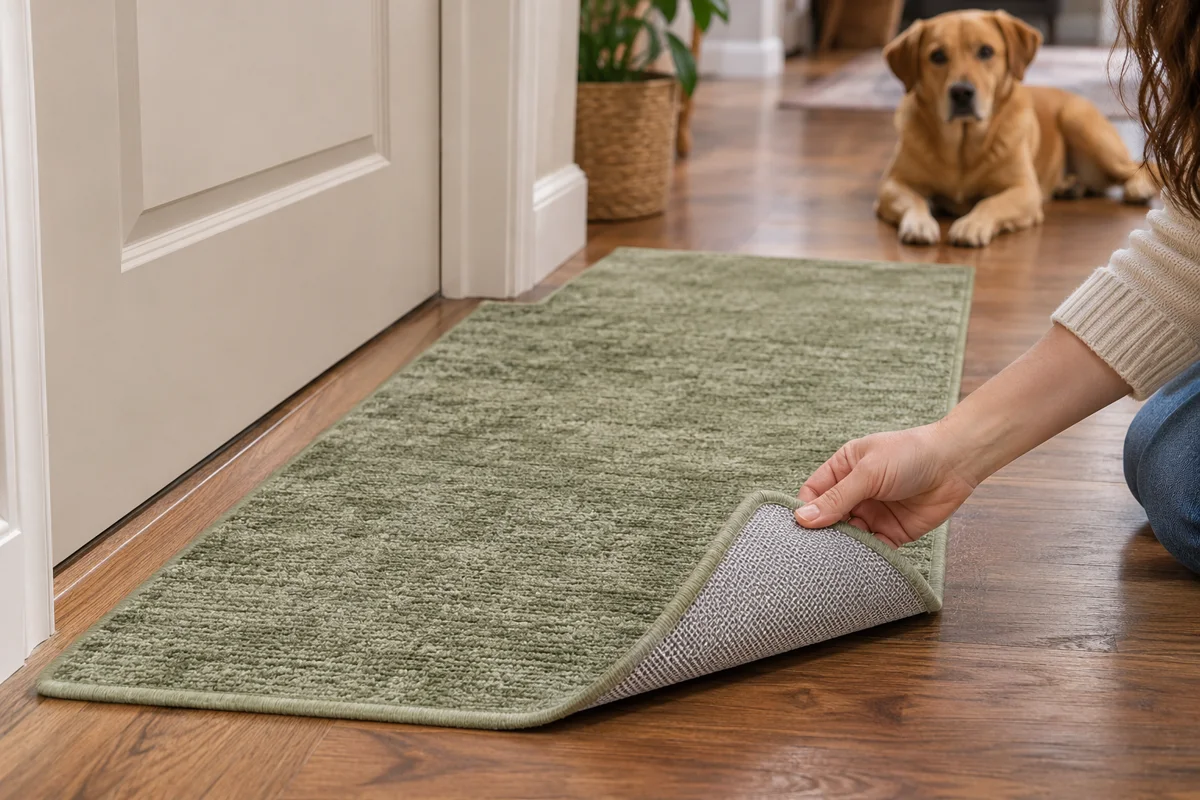
Choose a rug that lies flat on your actual floor and fits a washing routine you can keep up with. Check the care label, the underside and the edge before looking at the pattern. A small runner that you can wash and dry easily may be more useful by the back door than a room-size washable rug you can't lift when wet. Keep the existing rug if it stays in place and the problem can be solved by moving it or cleaning a smaller mat separately.
Start with the place that gets dirty first. Near an entrance, the rug may need to handle damp paws and loose grit. Near the sofa, you might be dealing mainly with hair and the edge where a cat likes to stretch. Those are different jobs. Check how pets and people cross the area, then choose a style that keeps the route comfortable while you deal with the mess you actually see.
See the three rug checks
Video summary: Check door clearance, test the edges, and read care instructions for both layers.
Compare rug designs for common household jobs
| Design | Where it can help | What to check |
|---|---|---|
| Low-pile washable runner | Narrow entrances and regularly used walkways | Edges lie flat and the door clears the rug |
| Flat-woven washable rug | Hair and crumbs that should be easy to see and remove | Grip on your floor and whether the weave snags |
| Detachable cover and separate base | A larger area where the top needs frequent washing | The cleaned cover is easy to refit without ripples |
| Small rubber-backed mat | Localized dampness near a doorway or bowl | Floor compatibility, grip and separate heat limits for the backing |
| Small washable mat on a bare floor | A concentrated spot such as a waiting area | Adequate space for the pet without blocking the route |
The label on the exact model matters. Some items described as washable can be hand washed or professionally cleaned, while others are suitable for certain machines and cycles. Some backing materials require gentler drying than the top fabric. Read the instructions for both pieces of a two-part system and check any floor restrictions before choosing a pad or rubber backing.
1. Measure the route, the door and the washer
Measure the clear floor area, then open nearby doors fully. Check where the bottom edge travels. If the rug would go under a door, include the thickness of the rug and any pad. Look at how the pet reaches the spot. A rug that covers the center of a wide room but ends just before a pet's usual turn can create a slippery step at the edge.
Use a paper outline or temporary markings suitable for the floor to test different sizes. Stand on the route in shoes and walk across at a normal pace. Carry something bulky past the proposed corner. Check where you would grab the rug and how you would carry it to the washer or sink. Leave enough room to lift it from either end, particularly in a narrow hallway. If an area is doing several jobs, see the small pet entryway guide for a practical way to check the door swing and waiting spot.
Check the washer manual before you rely on machine washing. A large rug can be hard to move and can become heavy when soaked. Follow the rug maker's limits and your machine's load guidance. Also measure the drying space. A top layer that fits the drum may need more space to lie or hang as directed than you have available on a rainy day.
2. Inspect what the pet will actually walk on
Look closely at the pile, especially near the binding and any decorative fringe. If the household includes a cat that snags claws on loops, try a simpler surface or remove fringe from the shortlist. If a dog chews loose threads, pick a rug with an intact, tidy edge and inspect it regularly. Shorter piles are often easier to brush or vacuum, but first check what the care instructions allow.
Put the rug or a sample on the kind of floor you have. Press it gently from a few directions. The rug should not bunch or slide as someone turns. If the maker recommends a separate nonslip pad, check that it suits your floor and fits entirely underneath. Avoid improvised scraps that can move independently. Lift a corner after use to check whether dirt or moisture is caught beneath the backing.
Notice how the pet approaches the rug when it is in place. If they go around an edge every time, check whether the surface moves or the pile catches. Give them a clear alternative route while you adjust it. A rug can be clean and attractive and still create a poor spot for a turn. Change the position or size before assuming that the room needs more coverage.
3. Plan the dry cleanup and the first wash
Pick up hair and loose grit before adding water. Use the cleaning method the maker permits. A handheld brush may be enough around an edge, while a suitable vacuum can help with hair across the middle. Look underneath before you put the rug back down. Grit under the backing can scratch a floor or make the rug feel less steady, even when the top looks clean.
For the first wash, follow the label for detergent, cycle and temperature. If the rug has a removable layer, look at how the corners align before separating the pieces. Check whether the bottom needs only a wipe or can be washed. Avoid using heat the maker hasn't allowed for either part. The muddy dog bed guide uses the same useful habit of reading each label separately and drying the parts before putting them together.
Once the rug is dry, refit it and check the ends again. A curled edge or hump can make an otherwise sound rug unsuitable for a high-traffic route. Look at the floor beneath the rug too, especially if the cleanup started with water overflowing from a bowl or damp shoes sitting overnight.
4. Decide whether it has made cleanup easier
Try the setup through a few ordinary days and at least one cleanup. Note how much hair or grit appeared, how easily you could pick it up, and whether you had to reposition the rug afterward. A runner that shifts every time you open the door creates another chore. A smaller mat in the right place may solve the same problem with less work.
For an area where you regularly refill water bowls, check the floor after a spill and make sure moisture cannot sit unseen underneath. If several people clean the room, share the care label details and the drying spot. Keep the routine simple enough that it still works when someone else needs to do it in a hurry.
Frequently asked questions
Does washable always mean it can go in my washer?
Read the instructions for the exact rug and your machine. Confirm the allowed method, size, wet load and drying requirements. A detachable layer may have different directions from the backing.
Should I put a washable rug directly beneath a water bowl?
Use a setup you can lift and inspect. If a rug stays damp underneath, a compatible flat tray or mat that you can wipe and dry may be easier to maintain. Keep the bowl stable and its approach clear.
What if a rug keeps curling around the edges after washing?
Check the care directions and the way it was dried or reassembled. Take it off the walking route while the edge is raised. If it will not lie flat, use a different size or design that remains steady on the floor.