How to organize pet toys with a rotating storage system
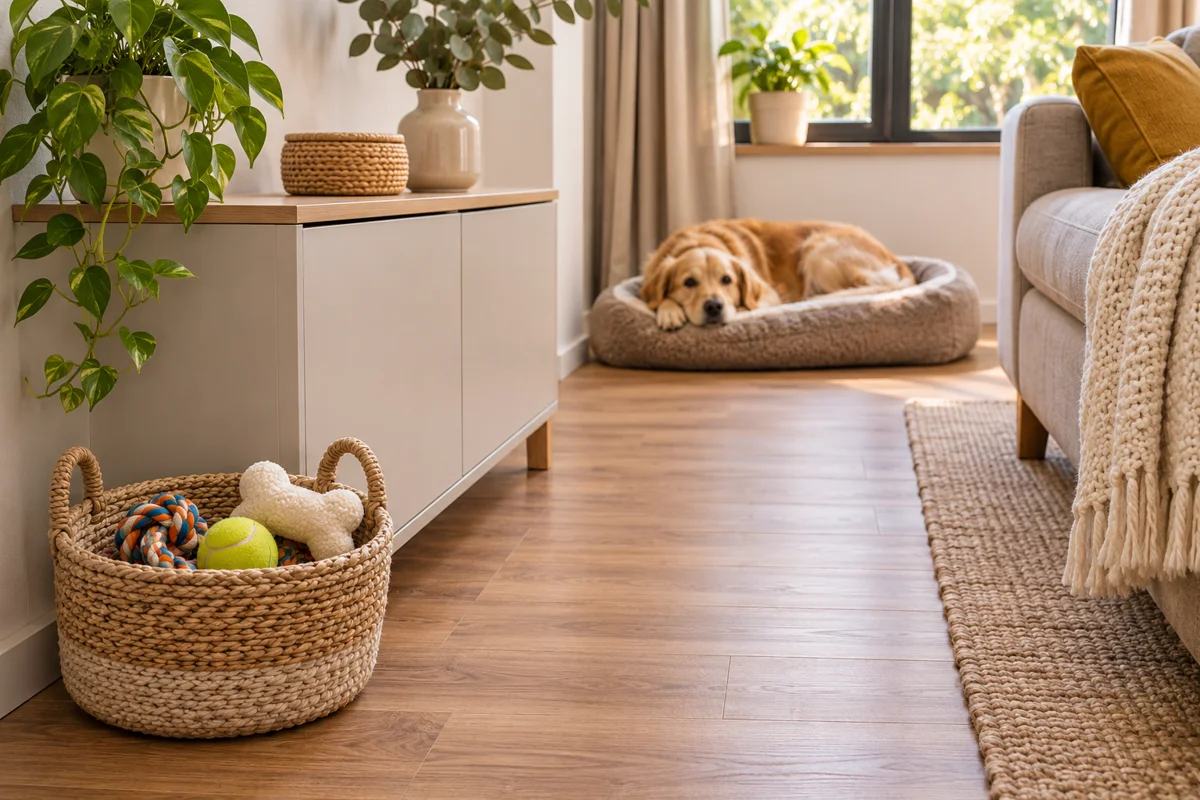
Keep a few suitable toys in one easy-to-reach play basket, put the reserve in a closed storage spot and give supervised toys a separate place. Then agree on a short reset after play: put the supervised items away, set damp toys aside to clean and return the dry toys to the basket. A rotation works when you can see what is available and put it away without spreading everything across the floor.
Start with the toys that are already in the room. Watch which ones the pet seeks out and where they end up. If toys collect behind a door or between the sofa and table, choose a storage spot near where play usually ends. In a household with several pets, the basket also needs to make sense for who can reach it. A dog should not be able to take small cat toys from an open bin.
See the three toy storage steps
Video summary: Keep a small selection, store supervised toys separately, and clean and dry toys before putting them away.
Decide where each type of toy belongs
| Group | Good storage location | What to check |
|---|---|---|
| Suitable for ordinary access | Shallow basket in the usual play room | Pet can reach appropriate items without tipping the basket |
| Supervised play | Closed cupboard, drawer or other inaccessible storage | Wand lines and small pieces are put away at the end of play |
| Reserve toys | Labeled bin on a practical shelf | Only clean and fully dry toys go back into storage |
| Wet or dirty toys | Separate washable tray until cleaned or dried | Location stays out of reach and away from food supplies |
| Worn or broken toys | Remove from the play area promptly | Loose parts are not left in an accessible basket |
Think about the containers from a pet's height. A long handle, strap or open loop can hang onto the floor. A tall bin may shift when a dog leans in. A basket with holes or fraying strands may attract chewing. Choose a container you can clean and that stays steady in its actual location. If the pet should access none of the items without you, keep them in a closed place and bring out what you need for the session.
1. Decide where play begins and where it ends
Spend a few minutes observing an ordinary session. Note where you reach for the first toy, which spot you use for play and where you set the toy down afterward. Ideally, you can return it without crossing the room or stepping over the pet. Pick a shelf, drawer or low basket outside the usual walking route. A corner of the room can work if the pet has a clear way to approach and move away.
Move a temporary empty container into the spot and live with it for a day. Can you open the door fully? Can another person get to a chair while you're picking up? Check that furniture and storage stay stable. If the box is near your entrance, use the small entryway guide to check door swing and the first few steps inside. Thin floor space is usually better used to keep a clear route than to add a second open basket.
Explain the setup to anyone else using the room. Make the difference between the play basket and the closed storage easy to understand. If two people share one drawer, place the toys in different sections so nobody reaches past a string or a damp toy to get the item they want. A clear arrangement helps somebody reset the room when you are away.
2. Keep a manageable choice in the play basket
Sort by what the toys are for and how they're used. Keep a familiar item the pet chooses regularly plus one or two others that are suitable for ordinary access. The exact number matters less than whether you can see the bottom of the basket and spot damage when you put something back. Store toys that are too small for another animal where access is controlled.
Keep the reserve clean, dry and easy to identify. You might group similar shapes together so you can replace a worn ball with an appropriate sound item. Check that flexible toys haven't become sticky, brittle or torn during storage. If your cat prefers a particular toy, keep it available when safe. The cat toy rotation journal shows how to track which pieces or play patterns your cat chooses without changing everything at once.
Put toys for supervised play in a closed location after each session. Store wands without putting tension on the line or leaving it trailing from a drawer. Examine attachments before the next session. If you share the house with children, agree which cabinet is for pet toys and what to do when a broken piece is found. Keep damaged pieces away from the animals until disposed of.
3. Separate dirty items before you rotate
When a toy lands in a wet patch or comes in from outside, take it out of the clean group. Follow its care instructions and dry it before returning it to storage. A damp bottom layer in a toy basket can go unnoticed if the top looks tidy. Choose a separate washable spot in the laundry area rather than putting rinsed items directly into the reserve bin.
Inspect what can be cleaned without compromising the toy. Check squeaker pockets, knots and seams where dirt can collect. If the maker says to spot clean, use that method. Remove any toy that has exposed stuffing, cracked edges or pieces that can be pulled free. Rotate in a sound replacement only if it suits the pet and the way it will be used.
4. Rotate one item and see what changes
Pick something from the reserve and try it during a normal session. Keep the other pieces in their usual places. If the animal ignores the option, you can try it again in a quieter moment or take it back out. Look for a useful change, such as a dog choosing a familiar toy during the rainy-day activity rotation or a cat joining a short play session after a favorite toy returns.
At the end of the week, check whether the setup reduced floor clutter and whether cleanup fits the household routine. If you still have toys under the sofa every morning, move the reset basket closer to where you normally finish. If the closed storage is difficult to reach, move it to somewhere practical but still out of the pet's reach. Keep using what works before expanding the system.
Frequently asked questions
Do I need to rotate toys every day?
Start with a manageable selection and change one item when useful. Favorites can stay if they are safe for ordinary access. Use the pet's behavior and the condition of the toys to decide when something should change.
Can cats and dogs use the same basket?
Use separate access when the toys differ in size or safety. A dog might swallow a cat toy or damage it quickly. Store small items for supervised play away from the dog and return them to closed storage after the session.
What if the pet tips the basket to find a toy?
Try a shallow sturdy container on a stable surface. If the pet chews the basket or it still moves, keep it out of reach and hand out suitable toys yourself. You can still keep a single predictable location for cleaning up.