How to make a small entryway work for people and pets
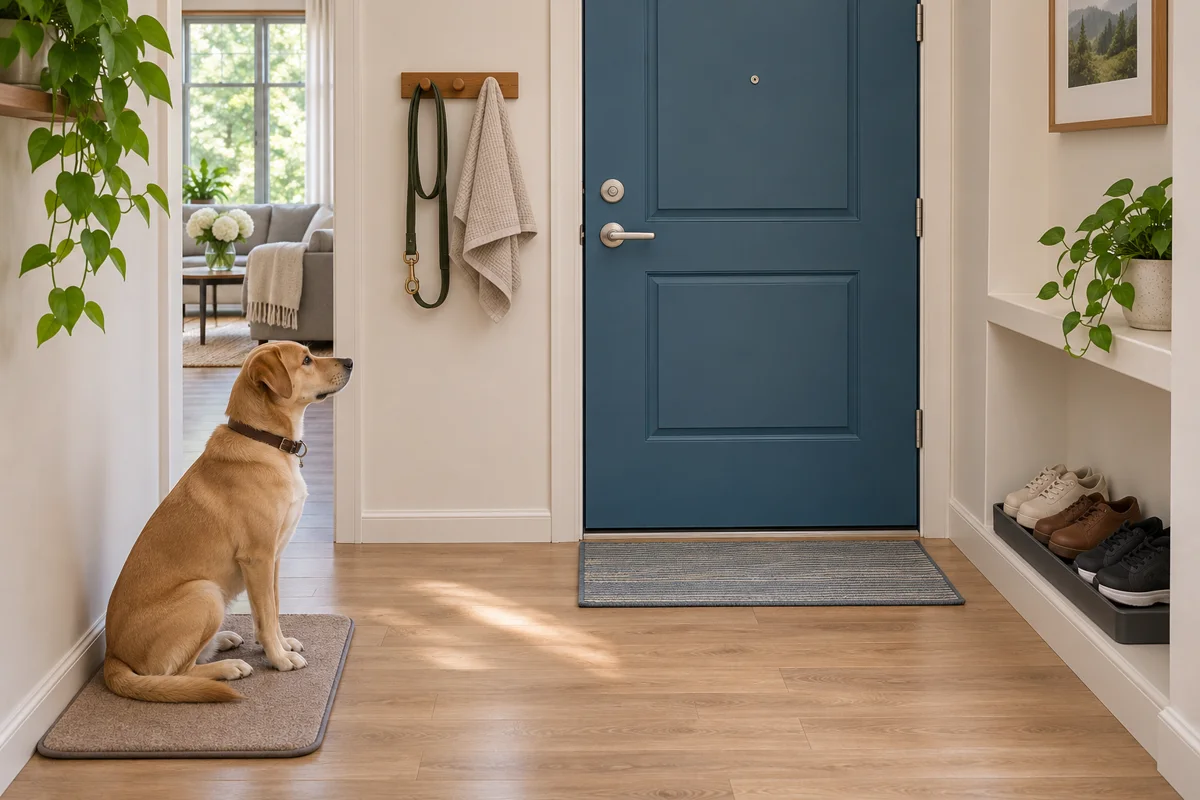
Start by clearing the full swing of the door and the route from the entrance into the next room. Give pets a place to wait off that route, and keep the items you reach for at the door in one shallow spot. Walk through the entry with your usual bag or coat before buying storage. If you have to step sideways to avoid a tray or reach across an animal to close the door, change the layout while the pieces are still easy to move.
A compact entryway works when everyday actions happen in a predictable order. Open the door, secure it, put down the wet things and walk into the house without retracing your steps. The same space might also serve as a route to a cat's favorite room or a place for your dog to wait before a walk. Leave room for those paths first, then use any spare depth for storage.
See the three entryway checks
Video summary: Clear the door swing, place a waiting mat away from the entrance and keep wet gear off the route.
Choose what belongs by the entrance
| Problem | Layout to try | Check before keeping it |
|---|---|---|
| Wet paws and shoes | Flat washable mat just inside the door | The door clears it and it doesn't shift on the floor |
| No place to clip a leash | Waiting spot off the door swing and a hook within reach | You can reach the equipment without opening the door |
| Storage blocks a narrow passage | Shallow wall storage or a basket in an unused corner | A passerby can carry a bag without brushing the basket |
| Cat watches close to the entrance | Familiar resting spot farther into the room | The cat has a clear way back into the house |
| Wet equipment piles up | Small drip tray in a recess, or drying elsewhere | It can drain or dry and never becomes a step in the walking route |
Use those options to address the problem you can actually see. A second basket does little for an entryway where the main issue is a raised mat corner catching the door. If water is the concern, a mat and a nearby place for damp equipment can do most of the work. The washable dog gear station covers how to keep everyday walking supplies and wet items separate.
1. Trace the door and the busiest route
Open the door fully with the area empty. Note where the handle reaches, where the bottom sweeps and where you have to stand to close it. Then walk from outside to the next room. Repeat it carrying the bag you normally bring home. If more than one person uses the entrance, watch how they pass one another on a busy day. The walking route you use in practice is more useful than a measurement taken straight across the room.
Look at the floor transitions. A threshold, stair or change in floor level needs to stay visible and clear. A mat should lie flat and suit the surface beneath it. Test the door with the mat in place and watch whether the edge moves when you step onto it. If the mat catches, choose a thinner one or shift it away from the swing while keeping a useful patch of floor covered.
Mark the edge of any potential storage with a piece of painter's tape temporarily, if it's suitable for the surface. Walk past that line before buying or moving a unit. Test the route with a second person or with enough space for the pet to walk by. Remove the marking once you've chosen a layout. You want to know where the storage can fit without becoming part of the path.
2. Give the pet a waiting place away from the door
Choose a place farther inside where the pet can wait while you put your things down or prepare a walk. It can be an existing mat beside a bench, as long as it lies flat and leaves an exit in the other direction. Avoid a place where someone steps directly over the pet to go farther into the house. For a dog, practice heading to the spot with the exterior door closed. For a cat, keep a familiar resting area accessible away from the entrance.
Decide how you will manage the animal when you open the exterior door. Use a closed interior door or another suitable secure setup when needed. A mat is a place to wait, and the layout should support your door routine. If you use a barrier, check it is installed as directed and position it so people can pass safely. Agree on the same routine with anyone doing a visit or walking the dog.
Try the sequence with bags in hand. Secure the exterior door, put down the bag and move to the waiting area. If the easiest place for a bag is where the animal waits, give the bag a different home. A hook or shelf can help if it is safely installed and within reach. In a rental, work with existing fixtures or use a stable low piece that can stay outside the walking line.
3. Separate everyday gear from things that need to dry
Put the regular leash and fitted harness in one reachable place. Store spares somewhere else if they fill the space you use every day. Keep the damp towel and muddy shoes where they can dry or be moved immediately to the laundry area. If a small tray sits inside a recess, check that you can lift it out and rinse it without shifting the whole station. Keep the lip out of any route a person or animal uses.
A mat with a washable surface can make cleanup simpler, but watch the underside after a wet visit. Give it time to dry and inspect it before returning it to the floor. Remove damaged pieces and check that every wet item has a destination. A common source of clutter is a spot that works only for dry gear, leaving nowhere for the damp piece after a walk.
4. Run a three-arrival trial
Try the layout during three ordinary arrivals, including one where you carry something awkward and one where the pet is with you. Note what you had to step around, which gear you couldn't reach and where water ended up. Change one thing at a time. A towel hook a little closer to the mat can solve a repeated problem without rebuilding the entire entrance.
Show the finished arrangement to other people in the house. If a sitter uses it, write down the door sequence and the location of the everyday supplies in the dog sitter handover sheet or cat sitter handover sheet. Recheck the layout when bulky winter shoes come out or when you move furniture in the adjoining room.
Frequently asked questions
What if the door opens straight into the living room?
Use a short clear landing inside the door and move storage along a wall beyond the swing. Choose a waiting place farther into the room and rehearse how you secure the pet before opening the exterior door.
Do I need an entry bench?
Keep a bench only if it solves a job and leaves room to pass. A hook, thin washable mat and towel elsewhere may be enough. Test the footprint first and check any furniture for stability.
Where should wet gear go if there is no room for a tray?
Carry it directly to a suitable drying area after you close the door. Keep a towel at the entrance for the first wipe and leave the passage clear. A tray in the walking route adds a step to manage every time someone comes in.