How to set up a washable dog gear station
Put the gear you reach for on the way out and the gear you need on the way back in within one arm’s reach of the door.
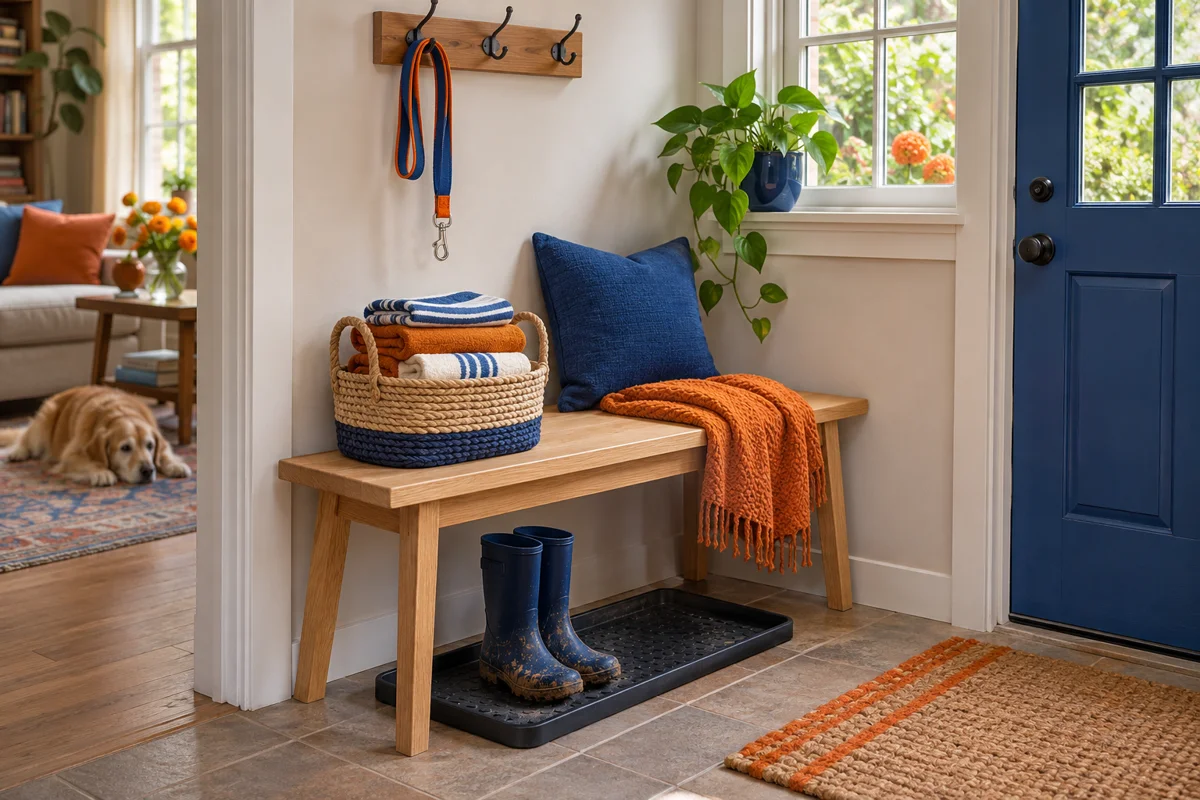
Start with the path through the door
Stand inside the door and imagine carrying a grocery bag while your dog comes in beside you. Where would you put your keys, where would the dog stop, and which way does the door swing? Those three details matter more than the size of the bench you saw in a photo. A good gear station makes the easy route the clean route. It gives wet shoes and towels a place to go without asking anyone to step sideways around a basket.
Measure the section of wall available with the door fully open. Mark the depth of a proposed tray on the floor with painter’s tape, then walk past it a few times. Do the same while carrying a bag or while another person passes in the opposite direction. If you need to sideways-step around the taped area, choose a shallower tray or move it to the other side of the doorway. Make sure the actual tray will not catch a door, hinge or loose threshold.
Renters can do a simple version with a washable mat, an open basket and a hook already fitted to the wall. For an existing coat rack, use one hook for the everyday leash and harness, and keep spare gear farther away. If you install a new hook, follow the instructions for your wall type and position it out of reach of a dog that chews straps. A hook that lies flat or has rounded edges is easier to live with in a narrow entrance.
Give wet gear a place to dry
Use a low tray with a lip where you expect shoes and wet gear to drip. A smooth surface with rounded corners is easy to lift and rinse. A textured insert can help boots drain, but check whether it lifts out so grit does not build up underneath. Put the tray beside the walking route, with the entrance mat covering the spot where feet and paws first land. Keep the tray flat, especially if someone might step onto its edge in a hurry.
Hang a soaked leash or harness somewhere it can air out, following the care instructions for the material. Avoid stuffing it into a closed basket while damp. That makes it harder to see whether it has dried and can leave the next person grabbing a wet strap. If you only have room for one hook, use a removable clip to keep the wet item apart from dry gear, or take the wet piece to a laundry area after the walk.
Keep one clean towel near the door and a second in reserve. Fold the clean towels in an open basket so you can pull one out with one hand. When the towel is wet, give it a separate place to hang or move it to the laundry. If all the towels are the same color, tie a small cloth marker around the spare basket so a sitter can tell where the clean ones go. Closed containers are useful for dry supplies, but they make a poor landing spot for damp fabric.
Choose surfaces you will actually clean
Check how the mat can be washed before you choose it. A large mat that does not fit your machine may be a nuisance even if the label says washable. A smaller mat with a backing that stays flat can be easier to lift and clean. If your floor is wood, follow its care instructions and lift the tray after particularly wet walks so moisture does not stay trapped beneath it. Check the underside of the mat when you wash it and give the floor time to dry before putting it back.
Use a cloth or soft brush to clear grit from the tray before rinsing it. That keeps loose pieces out of hinges and corners and saves you from spreading dirty water across the entryway. Read the care label before washing a harness or leash, particularly if it has leather trim, padding or metal hardware. Rinse away cleaner as directed and let gear dry fully before use. Store cleaning products separately from towels, dog food and bowls, where the dog cannot reach them.
Run a two-minute arrival routine
Set the leash beside the door before you leave. When you return, close the door first, then put wet shoes in the tray and use the towel if your dog is comfortable with it. Work slowly enough that the dog can step away if it wants. A dog that dislikes having its paws handled may do better walking across an absorbent mat, with any further cleanup happening later. Put wet gear on its drying hook, move the used towel to the laundry, and set a fresh one out if another walk is coming soon.
Try the routine for a week and notice which things drift out of place. If the leash keeps landing on the bench, move the hook nearer to where you take it off. If the towels disappear upstairs, put the spare basket on the route to the laundry rather than behind other supplies. If spare leads, seasonal coats and extra bags take over, keep only what you expect to use this week at the door. Give the rest a home elsewhere so the station is ready when it is raining and you have no patience for sorting.
Adapt the station to a narrow hall or a shared entrance
A narrow hallway can work with just a mat and two hooks. Hang the clean towel higher than the leash so the fabric does not catch on the clip. Put the boot tray along a wall instead of across the route to the next room. If your building has a shared corridor, keep the station inside your own doorway. That way nobody has to step over a tray on the stairs, and wet gear stays where you can check it after the walk.
When you have two dogs, separate the gear by hook rather than buying another bench. Group each dog’s everyday lead and harness together. If the harnesses look alike, use a distinctive tag on the hook so another walker knows which set fits which dog. Leave room between the hooks for straps to dry and avoid hanging bags where a dog can pull them down. Check a week later whether the labels still match what people actually use.
Leave clear instructions for someone else
Ask another person to find the lead, a clean towel and the waste bags without your help. Whatever they reach for first tells you whether your setup is obvious. If a sitter is coming, put the usual gear together and show them the spots for wet and dry items. A short note near the hook can identify which harness to use and where spare towels live. It is more useful than a long inventory of things the sitter will never need.
For a starting point on the gear itself, read how to measure and check a dog harness. Then test the new station after a short neighborhood walk, when the route through the door matters most.
| Step | What to do | What to check |
|---|---|---|
| Door and threshold | Mark the full swing | Nothing catches or blocks the walking route |
| Wet gear | Place a washable drip tray off the route | You can lift it to rinse and dry the floor |
| Dry supplies | Use one reachable shelf or hook | Clean towels and bags stay separate from damp gear |
See the three practical checks
Mark the full swing. Place a washable drip tray off the route. Use one reachable shelf or hook.
Frequently asked questions
Do I need a bench?
A shallow tray, a towel and a secure hook can work if they leave the entrance clear.
Where should a soaked harness go?
Follow its care instructions and hang it in an appropriate ventilated area to dry.
What if the tray blocks the entrance?
Move it to a recess or carry wet gear directly to a separate drying area.