How to write a dog sitter handover sheet
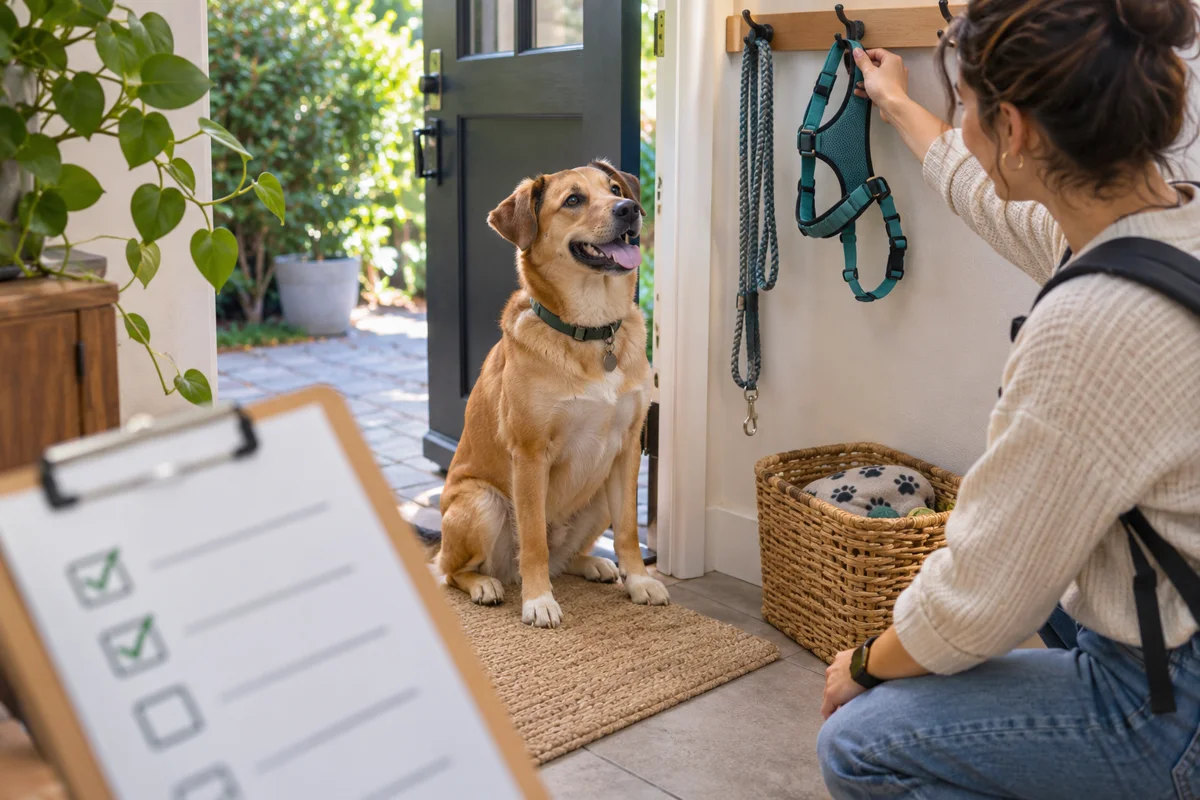
Put today's routine, essential contacts and the location of the dog supplies on one page. Start with the things the sitter will need before they can reach you: how to get in, where to clip the leash, where to find the pre-portioned meals and whom to call if plans change. Keep longer explanations behind that first page. A sitter who is standing in the doorway with a wriggling dog should be able to find the next step in a glance.
Write the sheet for the person who is actually doing the visit. Someone staying overnight needs the bedtime and morning routines. A friend coming in for twenty minutes may only need the walking route, the water check and the lock-up routine. Read the sheet in the order the sitter will use it. The time it takes to locate the spare leash matters more than the amount of detail in a paragraph about your dog's personality.
See what to put on the first page
Video summary: Put the visit in order, label the supplies, and name a backup contact.
A handover sheet you can fill in
| Section | What to write down | Example |
|---|---|---|
| Arrival and departure | Visit window, which entrance to use, what to check when leaving | Use the side door, close the inner gate before opening the outer one |
| Meals and water | Time window, labeled portion, bowl location, water check | Dinner portion labeled Friday PM in the second fridge drawer |
| Walks and play | Equipment, first route to try, alternative if it's crowded | Teal harness by the door, use the back loop if the school gate is busy |
| Rest | Usual resting spot, doors to leave open or shut, bedtime routine | Leave the living room open, keep the laundry room shut |
| If plans change | Your number, local backup and veterinary contacts | Call the backup if I am unavailable and the visit may be missed |
| End-of-visit update | What to report, preferred channel and any follow-up | Text when the door is locked and mention any meal you left untouched |
The examples show what a useful instruction sounds like. Replace each one with something true for your household. Keep entry codes and details about where you keep keys in a private message to the sitter. A printed routine can sit by the bowls without also becoming a map of how to enter your home.
1. Write the ordinary visit in order
Start with the first five minutes. Which door will the sitter open? Is there a place to set down a bag before the dog approaches? Will they need to latch a gate before taking a leash off a hook? These may be automatic steps for you, but an instruction like “please be careful at the door” gives a visitor little to go on. Use the action you actually want, such as closing the inner gate before opening the outer door.
Next, write the rough order of the visit. For a walking visit, that might be greeting the dog in the hallway, fitting the harness, walking the short loop, topping up the water and locking up. If the dog needs something removed or put away after the walk, include that step before the exit instructions. Write time windows where there's flexibility and precise times only where timing actually matters.
For a longer stay, repeat the method for breakfast, dinner and bedtime. Put recurring items such as the location of waste bags in a supplies section so the sitter only has one place to look. If somebody else is also visiting, write who handles each meal and who confirms it was given. It's much easier to avoid a second dinner when the note identifies who is responsible for the first one.
2. Make the equipment and food easy to identify
Write descriptions that distinguish one item from another. If there are two leashes on the hook, “the short blue fixed leash” is more useful than “the usual leash.” Show the sitter how to fit your dog's harness during a practice visit if they're unfamiliar with it. Put bags, a towel and spare gear nearby, and point out the location before you leave. The Bigodig gear station guide can help if supplies are currently scattered between rooms.
Label the meals so somebody else can match the right portion to the correct visit. If you have two dogs, include the dog's name on each portion and explain where each dog eats. Write down any feeding restrictions and show which treats, if any, are part of the arrangement. “Ask me before offering anything else” is an actionable instruction. A long inventory of the contents of the pantry will probably go unread.
If medication is part of the care, discuss it in advance and make sure the sitter has agreed and knows where the original instructions are. Keep the current veterinary directions with the original container. Write who the sitter should contact if a dose is missed, refused or uncertain. Give the sitter a simple place to record what happened and when so neither of you has to guess after a handoff.
3. Give the sitter a route and a fallback
Draw a simple loop or send a map link, then write one alternative. Name the point where you normally shorten the walk if the street gets busy. If the dog does better with a little distance from passing dogs or bikes, mention a location where the sitter can step aside or turn around easily. The quiet dog walk guide explains how to choose a route with room to change direction.
Agree on what to do if the dog won't leave the doorway, the weather changes or the route is closed. The fallback may be a shorter outing or a call to the backup if the visit is no longer manageable. Explain what your dog normally does in that situation so the sitter can tell a familiar pattern from an unexpected change. One useful example is better than a list of every concern you've ever had.
4. Rehearse the handover and close the loop
Ask the sitter to try the first few steps while you're there. Watch what takes a moment to find. If they reach for the wrong leash, change the instructions or move the correct leash to a more obvious spot. Put the emergency contact and backup on the first page in readable type. Confirm they are available during the dates you are away and tell the sitter where to find the address or the practice's after-hours instructions.
Agree on a quick update after each visit. Ask for the facts that will change your next decision: whether the walk and meal happened, whether the dog settled, and whether anything needs a call. A short message like “walk done, drank water, dinner left untouched, side door locked” is enough to help you follow up without asking the sitter to write a report. If the sheet changes, send one current copy and date it so both of you know which version to use.
Frequently asked questions
Should I print the sheet if the sitter already has a message?
A printed copy is handy by the supplies if someone needs to find a detail with their hands full. Keep the copy short and give the sitter a digital version to use away from the house. Share private access instructions separately.
What goes on a dog sitter handover for just one walk?
Give the arrival window, equipment location, walking route, fallback, water check and lock-up instructions. Include your contact and the backup contact. Add meal instructions only if the sitter is handling a meal during that visit.
What if my dog has never met the sitter?
Arrange a brief introduction and practice the parts of the visit that need coordination, such as entering, fitting the harness and heading outside. Use what happens to improve the handover. If the sitter cannot comfortably handle the planned visit, agree on a different arrangement before you leave.