How to plan your dog's first overnight trip
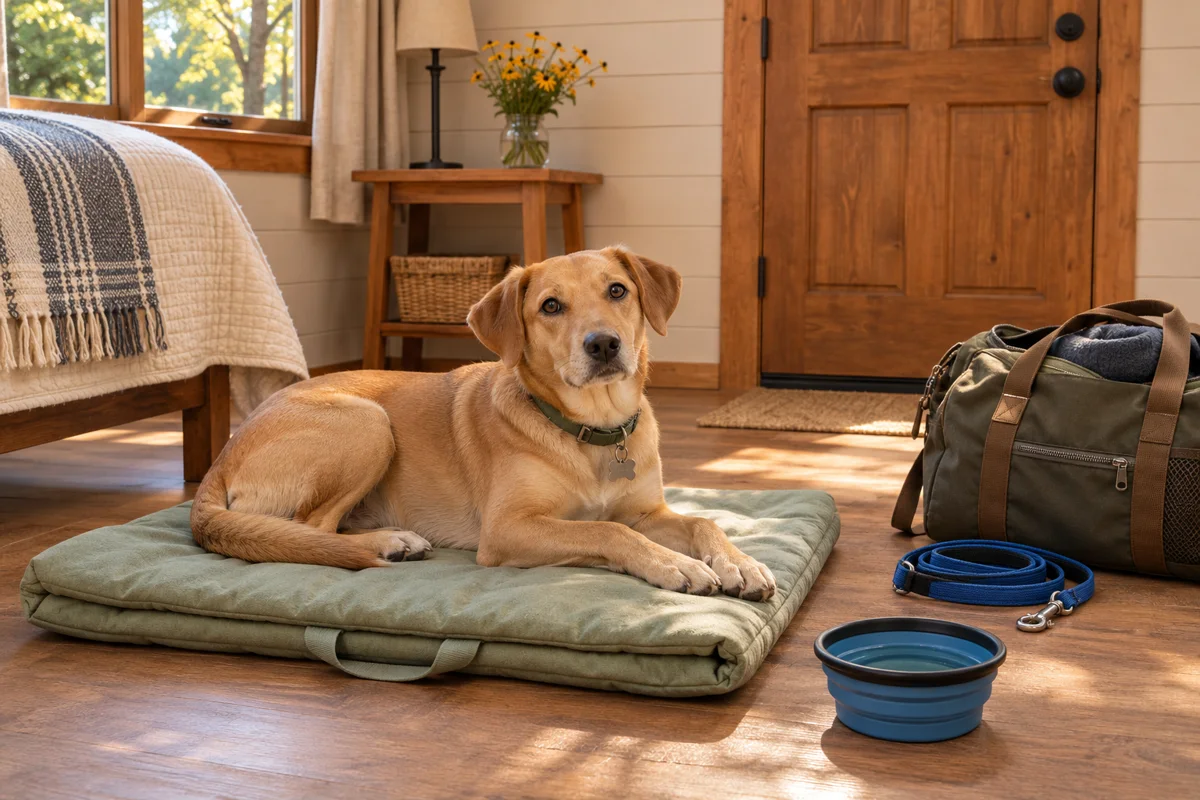
For a first overnight with your dog, choose one simple destination and plan to arrive before dark. Pack the equipment your dog already uses, agree on the rules of the accommodation and find a place for the first toilet break before unpacking. The first evening goes more smoothly when you can repeat the familiar order of a walk, water, dinner and rest without searching through the car for supplies.
A one-night visit to someone who knows your dog or a nearby dog-friendly rental gives you room to adjust. Start by working out what you'll do immediately after the car stops, where your dog can settle while you unpack and where you'll go for the last outing. Plan the hardest part of the evening first. If it is likely to be the lift, lobby or a shared garden, ask the host how to get through that part before you travel.
See the first-arrival routine
Video summary: Keep arrival supplies ready, stop for a toilet break, and set up a familiar resting spot.
Pack for the moments when you need something quickly
| When | Keep ready | Check before leaving |
|---|---|---|
| Arrival | Everyday leash, fitted harness and waste bags | Find the entrance and first permitted toilet spot |
| During stops | Water, familiar bowl and a towel | Keep them in a bag you can reach without moving luggage |
| Dinner | Measured familiar food, bowl and ordinary treats | Confirm storage and plan for the usual meal window |
| Bedtime | A familiar mat or bed and your normal walking gear | Choose a sleeping spot away from an exterior door |
| If plans change | Host contact, backup destination and local vet contact | Save the details somewhere accessible without mobile data |
Put the arrival gear in a small, separate bag. If you use a travel restraint, keep the walking leash where you can reach it before releasing the dog from the travel setup. Everyone in the car should know who handles the dog and who opens the doors. One person can take care of both tasks on a solo trip by deciding the order before parking.
1. Choose a destination you can picture
Check the accommodation rules and ask about anything that affects the actual visit. How do you enter with the dog? Are there open stairwells or a front entrance directly onto a busy street? Does the property share a garden with another household? If the host can describe an alternate entrance or an easy nearby spot for an evening outing, save those details with the address.
Look at the route from your sleeping space to the outside. A dog-friendly building can still have a crowded corridor or a lift you would rather avoid. If you're staying with friends, ask about their pets and the doors or gates they normally use. Agree on a quiet room or a simple way to give animals space if they need it. You can learn a lot from seeing where each animal can rest without needing to pass another at a narrow doorway.
Pick an arrival window that gives you time to adapt. If the room is ready only just before dark, find somewhere to stop beforehand where the dog can take a short break. Keep the first evening clear of booked activities so that you can finish setting up the room without checking the clock. A first trip works well as a chance to learn how the dog responds to the setting, even if all you do after arrival is take one short walk and settle in.
2. Try the travel setup close to home
Use a vehicle restraint or carrier suited to your dog and follow its fitting instructions. Check how it interacts with the luggage. A suitcase that blocks the carrier opening or keeps you from clipping the walking leash before opening the door will cause problems at a stop. If you're using public transport, check that operator's rules for carrying dogs on that journey.
Do a short practice run beforehand if the setup is new. Drive somewhere familiar, park safely and rehearse changing from travel to walking gear. Take note of anything you have to reach awkwardly or remove before you can get to the dog. Move that item before the main trip. If your dog struggles with travel, raise specific concerns with your vet before you leave, and build in enough time to shorten or change the plan.
Check the condition and fit of gear you haven't used recently. Try the harness indoors, and make sure the tags and contact details are current. The Bigodig harness fit guide shows what to look for before and after a walk. Pack a fixed leash you can gather easily at the accommodation entrance and use a spare only if you already know how it fits into your setup.
3. Give the dog a predictable first hour
On arrival, take a short toilet break in the agreed spot. Keep the outing simple so you can find the room again without rushing. Back inside, check the space before letting the dog explore. Look for open windows, exterior doors, food or cleaning products at floor level and places where somebody could open a gate unexpectedly. Set out water and put the familiar bed or mat where the dog can lie down while still having a clear route away from foot traffic.
Choose one person to handle the dog while others carry in bags. If you are alone, do fewer trips and bring in the arrival bag first. Take a minute to notice how the dog responds to the room. If noises in the hall draw attention every few seconds, try moving the mat farther from the door or sitting together in a quieter part of the space. You can make the rest of the evening simpler by skipping the busiest walk and using your quiet walking route approach in the new neighborhood.
4. Set up tomorrow before going to bed
Put the walking gear, bags and shoes where you can find them without turning on every light. Decide who takes the last outing and who handles the first one in the morning. If several people are helping, write a short note so everyone knows which meal and walk are already done. The dog sitter handover guide has a table you can adapt for a friend who is helping on the trip.
Do the first morning outing before the room fills with luggage again. Give your dog a place to wait away from the exit while you pack. Check under furniture for toys and wipe up spills around the water bowl. Keep the leash and water accessible until the trip is over. After you get home, note the one thing that worked best and the one thing you'd change. That is enough to make the next overnight easier to plan.
Frequently asked questions
What if the dog won't settle at bedtime?
Check the routine first. Offer an ordinary toilet break if one is due, then see whether a familiar mat and a quieter place to rest help. If the situation cannot be managed comfortably or safely, use your fallback plan. Contact a vet if you notice signs that concern you.
Should I bring the dog's whole bed?
Bring it if it fits easily and is part of the usual routine. Otherwise, use a familiar washable mat your dog already chooses to lie on. Try it at home before the trip, and check that it stays flat on the floor at the destination.
Is one overnight enough for a first trip?
One night is enough to learn how the arrival, evening and morning go. Pick a close destination with a manageable return journey. Leave room in the itinerary to adjust once you've seen how the dog responds.