How to rotate indoor dog activities on a rainy day
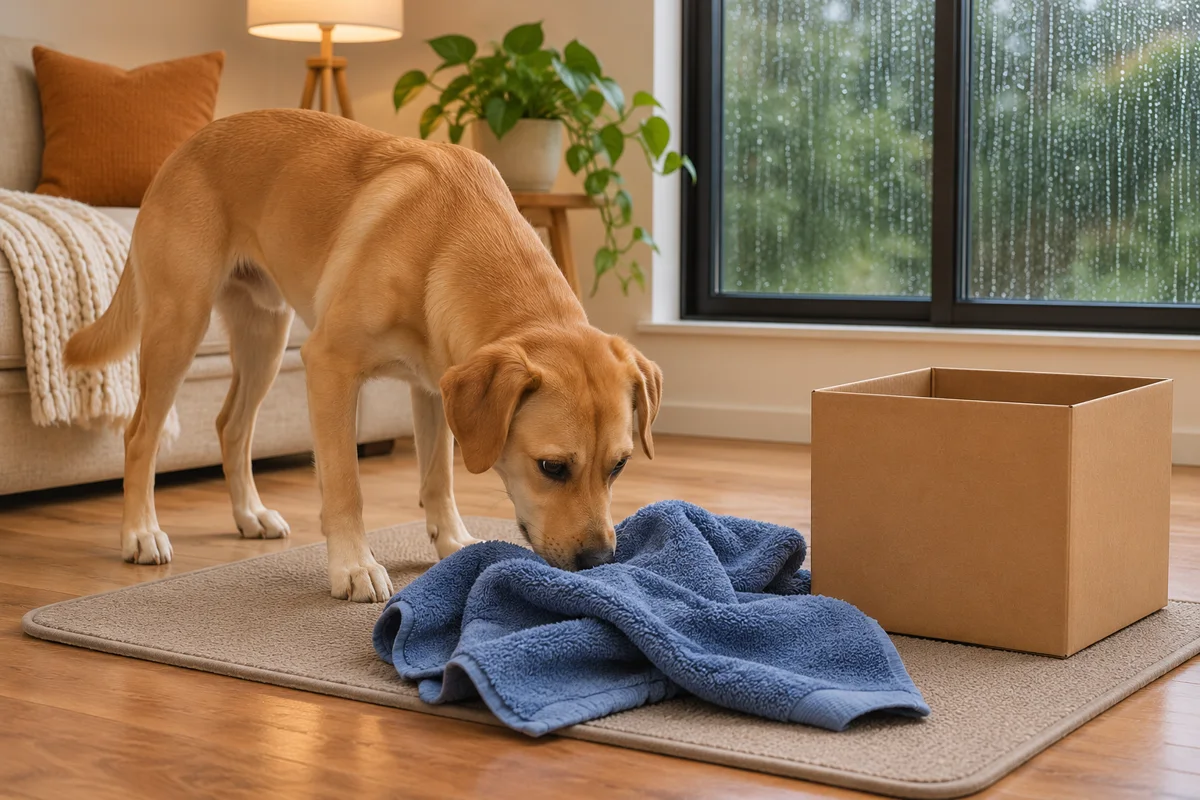
Pick three activities you can set up and put away in a few minutes: an easy search, a short session with a familiar toy, and a quiet activity your dog already enjoys. Offer one at a time and watch what happens before choosing the next one. A rotation lets you adapt to the dog in front of you. If the search turns into chewing the towel, put it away and switch to something you can supervise comfortably.
Consider the day as a whole. Your dog still needs ordinary chances to go outside when conditions permit, access to fresh water, and somewhere to rest. Indoor play can fill part of the time that would otherwise go to a longer outing. Start in the room with the safest footing and the fewest things to clear, then pick an activity that works in that space. You can do this with a familiar toy and a washable mat.
See a simple indoor play routine
Video summary: Clear the floor, make the first find easy and put the game away afterward.
Choose a game you can supervise and put away
| What you notice | Activity to try | When to finish |
|---|---|---|
| The dog is interested in sniffing | Put a familiar toy partly in view by the mat | After a few easy finds, or when the dog moves away |
| The dog brings you a toy | Play gently in an open area with steady footing | When either of you needs space or the toy starts to come apart |
| The dog watches you but stays on the mat | Practice a familiar cue the dog already enjoys | After a few easy repetitions |
| The dog has had enough interaction | Clear the game and leave the resting spot available | Let the dog choose when to rejoin you |
For food games, use something already appropriate for your dog and take it into account when you portion meals. In a household with multiple pets, give each animal space and avoid games that put them in competition over food or toys. If you're managing a special diet or a history of guarding, choose an activity appropriate to the plan already in place for that dog.
1. Reset the room before starting
Move cords, slippery rugs and objects that could get knocked off low furniture. Check the path your dog would take if they turned around quickly. A narrow gap between the sofa and coffee table might be fine for walking through but awkward for play. Keep the game on one flat area where you can see the dog and reach the toy easily. If the floor offers poor traction, use a suitable mat that lies flat.
Pick up the items you'll use before you invite your dog over. Keep other toys out of the way so you can see what interests them about this activity. Set a chair nearby if you want to sit while they explore. You should be able to reach the play area without catching your foot on a folded mat or stepping over a toy. If you have to reorganize the room after every repetition, make the setup smaller.
Check the material you put on the floor. A towel can be useful as a visible marker if your dog leaves fabric alone. Choose another setup if your dog tends to swallow threads or tear cloth. Keep cardboard dry, clean and free of tape, staples and loose packaging. The cardboard sniffing guide explains how to introduce an open box and change the difficulty without piling on extra objects.
2. Start with a find the dog can solve
Place one familiar toy at the edge of the mat where the dog can see part of it. Invite them to investigate, then wait. If they go right to the toy and bring it back, put it one step farther away for the next round. If they wander off instead, move it closer or switch to something else. Beginning with an easy search means you can observe what the dog chooses to do without holding a treat over their head or directing every step.
Change one thing per round. You can move the toy to the other edge of the mat or put it beside an open box. Changing the room, the toy and the hiding place at the same time gives you little information about why the dog stopped investigating. Hold back on difficult hiding places. Putting a toy under heavy furniture can lead to pawing and frustration when the dog knows it's there but cannot reach it.
Put the search setup away when you finish. That includes the towel, cardboard and anything with food in it. Leave the ordinary resting area available. If the mat you used for the game is also the dog's bed, clear it immediately so they can return there without searching between folds for something else to eat. For a mat that came in wet from outside, clean it and let it dry before bringing it into the play space.
3. Choose a second activity that feels different
If the dog is still interested after the search, try a familiar cue such as touching your hand with their nose, or a gentle game with a toy you have already used together. Use a cue they know before introducing a new one. A short round gives you a way to continue even when there is little floor space. Skip repeated sharp turns or fast indoor fetch if the room and floor cannot accommodate them safely.
Make sure the dog has a way to disengage. You can sit beside the mat and offer the game once, then watch whether they approach again. If they walk away or lie down, take the hint. If they keep looking for the toy after you put it away, give them a moment to settle before making the next decision. You might find that a short break and a trip outside at the next safe opportunity fit better than another game.
4. Keep a small record so you know what to repeat
Write down the starting activity, whether the dog chose to join, and what happened when you put it away. You might note that the dog enjoyed two short searches but chewed the towel on the third. On the next rainy day, try two rounds with the toy next to the mat and skip the fabric. The record can be as short as one line on your phone or a note on the fridge.
Store the pieces together so another person can repeat the activity without asking you. Write down when to stop, what to put away, and what the dog tends to enjoy. The dog sitter handover sheet has room for an indoor activity and a fallback. Keep the setup simple enough that anyone responsible for the dog can do it safely.
Frequently asked questions
How many games should I plan for one afternoon?
Plan a few options and offer the first one. A dog may enjoy a couple of short rounds and then choose to rest. Keep the rest of the plan available for later instead of moving through it on a timer.
Can I use toys instead of treats for the search?
Yes, if the dog wants to find the toy. Start with a familiar object they normally choose to pick up. Put it somewhere easy to see and reachable without having to climb, jump or squeeze behind furniture.
What if my dog ignores the first game?
Make the find easier once and see whether the dog chooses to approach. If they still walk away, clear the setup and let them rest. Try a different activity later when they're interested. The point of a rotation is that you have other options ready.